Material Handling Tip: Finding a Load’s Center of Gravity

Learn the importance of finding the center of gravity of a load along with step-by-step instructions on calculating the center of gravity (CoG) or balance point of unusually shaped loads.

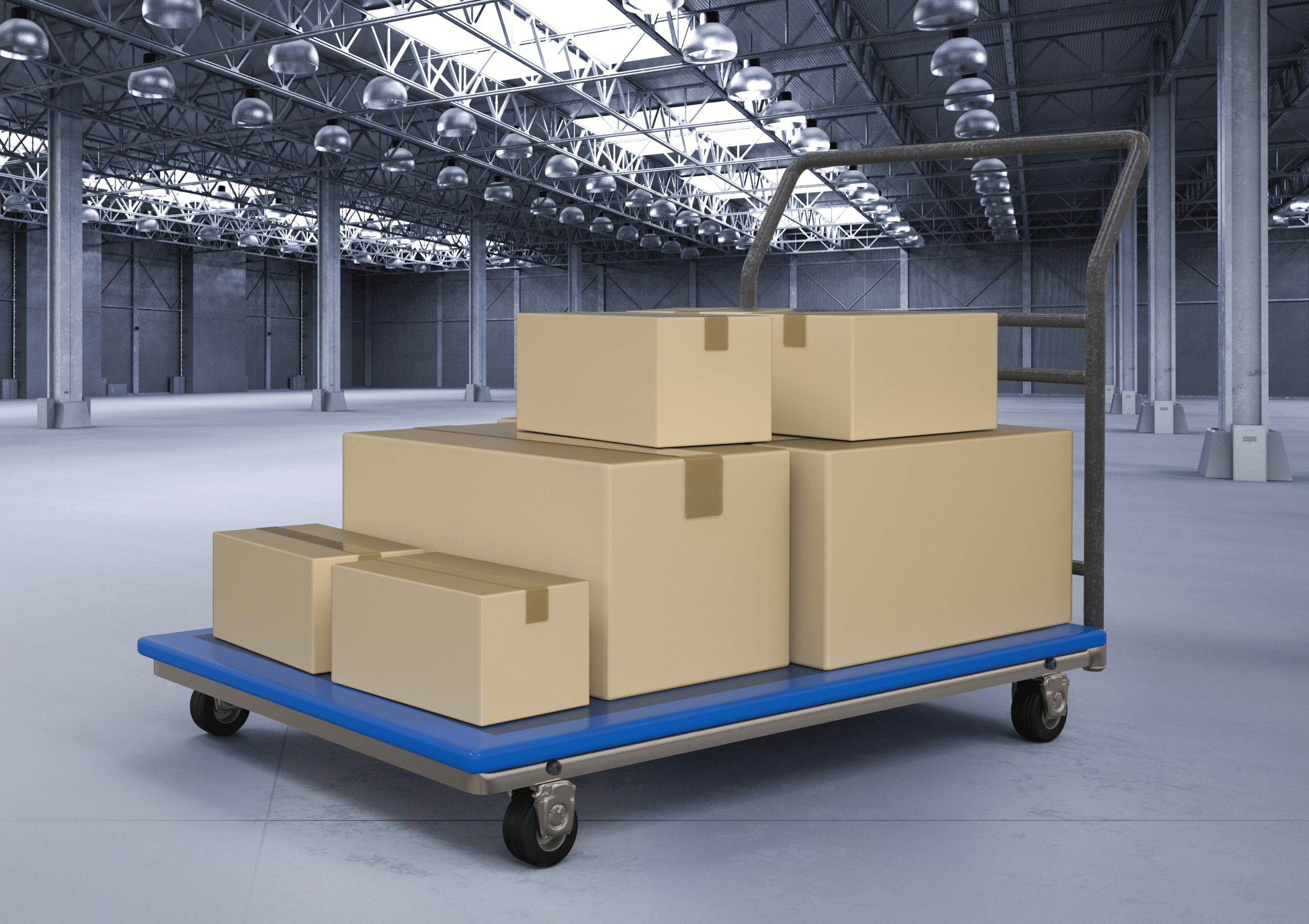
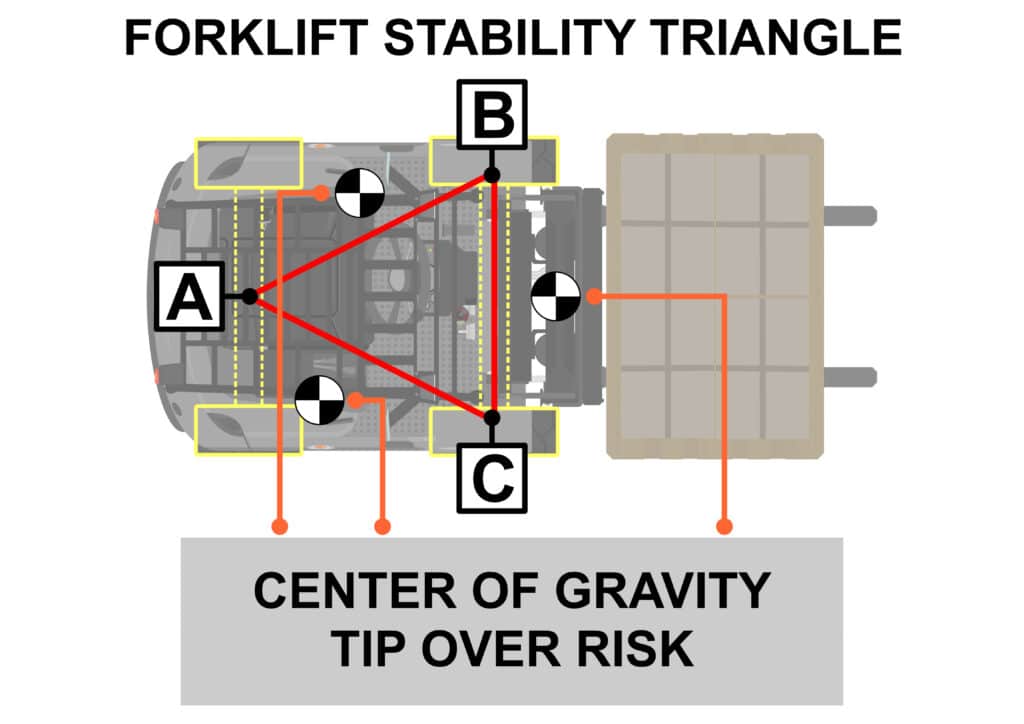
In material handling, having a well-balanced pallet can often make the difference between a smooth trip from point A to point B and a costly tip over. Finding this equilibrium is fairly intuitive if you’re moving items that are uniform in shape and weight. However, what do you do when moving objects that don’t have an obvious middle?

What is the Center of Gravity of a Load?

In physics, an object’s center of gravity, center of mass, or balance point is an imaginary point where there is an equal mass on all sides. In the context of material handling, the Center of Gravity (CoG) refers to the single point of the load or object where it can be carried perfectly balanced. To look at it another way, it’s also the point at which all the load’s weight is concentrated.
Finding the Location of the Center of Gravity

While there is always the trial and error method, picking different spots and doing test lifts until you find the right location, there are shortcuts you can take to finding the center of gravity on a load without an apparent midpoint. Here are step-by-step instructions on finding the center of gravity of an object or load you need to move around the warehouse using lift scales, a tape measure, and a calculator:

1. Determine Load Weight Distribution

Determining weight distribution is where the lift scale comes into play. First, you’ll need to weigh one side of the load, then the other. This will give you the object’s left end weight (LEW), Right End Weight (REW), then combine them for the total weight of the object. The center of gravity shifts towards the heavier side, so knowing these weights is a critical step.

2. Divide the Heaviest End by the Total Weight

You only need to calculate one side. Take the heaviest weight between LEW and REW and divide it by the total weight. The ratio of the total weight of an object with its heavy end determines the pivot point of the load. This is where the CoG resides.

3. Measure the Span of the Load

The next step is to measure the span of the load. The span is the distance between the two pick points you weighed on either side. Using a tape measure, gauge the distance between pick points and apply the ratio from the previous step to calculate where along that span, the CoG lies.

4. Practice Tests

Once you have your CoG measurement, we recommend practice tests where you try lifting the load with a jack or crane a few inches at a time to make sure it’s balanced. If it doesn’t retain its stability and starts to tip or swing, set it back down, adjust the pick point, and try again.

Example

In this example, we have a load with a LEW of 2,000 lbs, a REW of 1,000, and a total weight of 3,000 lbs. The span is 100 inches. Since the Left End Weight is greater, we divide that by the total weight of 3,000 lbs.

LEW/TW = X

2,000/3,000 = 0.67 

Now, take the span of 100 inches and multiply it by the ratio of the weights.

(LEW / TW) x 100” = CoG

(0.67) x 100” = 67”

The CoG is at the 67-inch mark for this load, closer to the heavier side.

In summation, finding the center of gravity for an irregular load can be done through trial and error. Still, some simple math and measurements can significantly reduce the time spent finding that balance.
Balancing Your Workload with Nutting

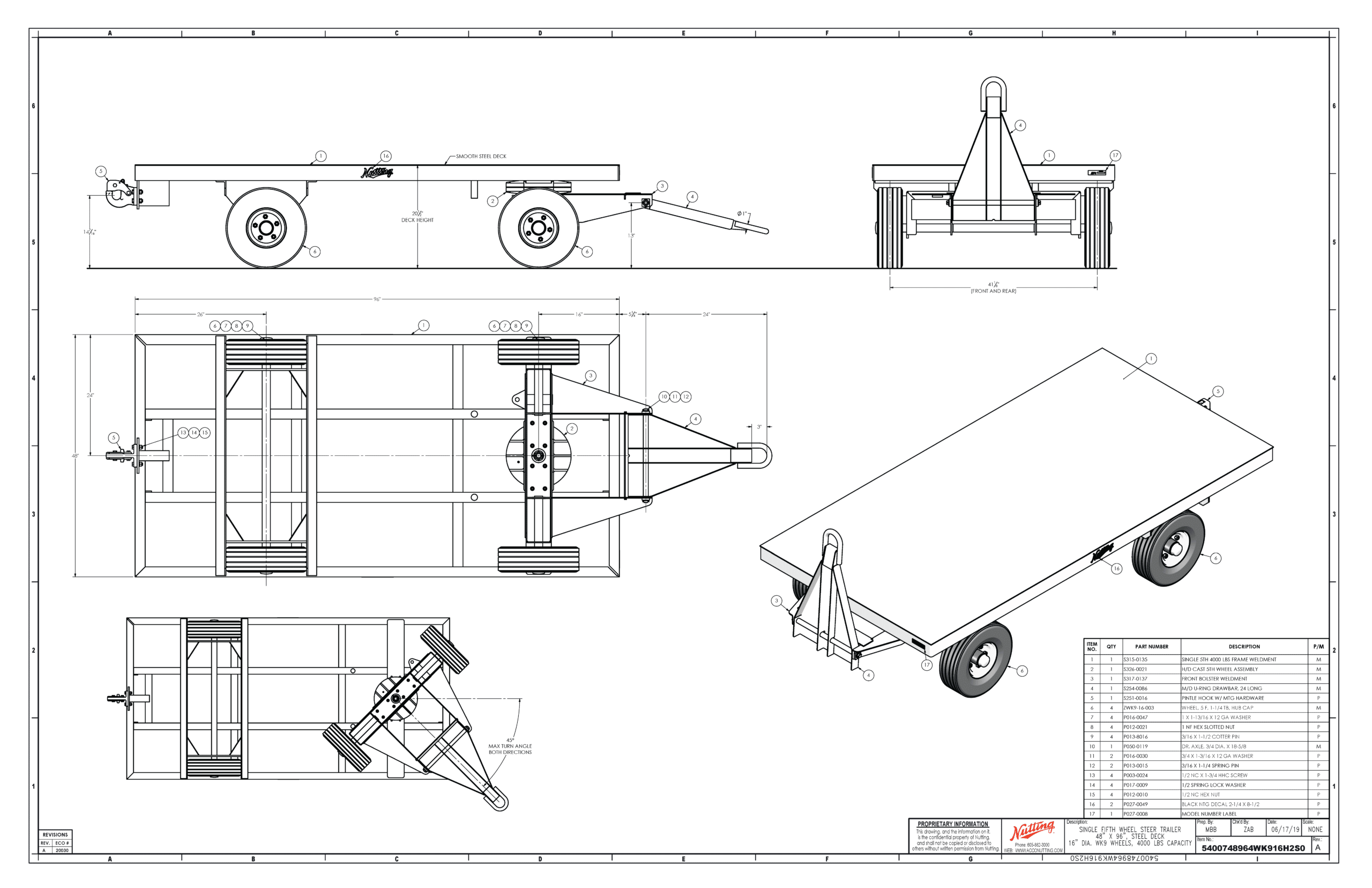
At Nutting, we engineer our products to seamlessly integrate with your existing operation with carts that can be customized with various features to accommodate different load types. Does your team produce oddly shapped parts? We can help provide a solution for your needs, all complete with a calculated center of gravity in your production prints.

Knowing which options are best for your application can save you time and money in the long run. That’s why it’s essential to consult an expert before purchasing.

Nutting has over 100 years of experience designing and manufacturing high-quality pallet carts, order picking carts, industrial carts, and more so you can be confident that you’re getting the best possible product for your needs. Contact us today to learn more about our pallet carts and how they can improve operational efficiency in your warehouse or distribution center.
Warehouse Basics: What Are Material Handling Systems?

Material handling is the short-distance movement of materials and products throughout the manufacturing, storage or warehousing, distribution, consumption, and disposal process. It involves a complex and precise set of systems working together to protect, store, and control materials and products. Every industry employs some form of material handling, from aerospace to ecommerce.

Companies executing the movement of goods deal with a particular set of handling costs, safety concerns, efficiency measures, and equipment needs. This guide will explore the definitions of material handling, types of material handling equipment, and basic principles to give you the resources you need to run your business smoothly.

Material Handling Equipment Types

There are four types of equipment that work together to complete every material handling activity, from hosting goods in a long-term storage facility to hoisting materials meters in the sky:

1. Bulk handling equipment

Equipment used for the transport, storage, and control of materials in bulk form is called bulk handling equipment. Bulk form typically refers to loose bulk form, such as dry materials like sand, gravel, or salt. The most common types of bulk handling equipment include:

  • Hoppers: Large, metal, funnel-like equipment used to store material and put it into containers.

  • Stackers and reclaimers: Machines used to pick up or dump raw materials into piles

  • Conveyor belts: Parts of a conveyor system used to move materials between locations

  • Elevators: Bucket and grain elevators, or grain legs, move and store bulk materials vertically

2. Industrial trucks

Industrial trucks are vehicles that transport materials, ranging in size and type. Categorized as stacking or non-stacking, industrial trucks can also be automated or hand-operated, so they sometimes fall under the umbrella of engineered systems. The main industrial trucks companies employ are:

3. Storage and handling equipment

Like their title, any equipment used for the safe storage and organization of materials is considered storage equipment. Storage equipment can be used long-term or short-term. It’s usually stationary and manual, not automated, but may be used in conjunction with automated systems. Storage includes:

  • Drawers, bins, and shelving: Used for a range of storage space needs

  • Mezzanines: Raised indoor platforms expand available space with vertical storage areas

  • Racks: Cantilever, flow, sliding, drive-in, drive-through, and push-back racks are all commonly used for storage in between receiving and distributing materials

4. Engineered material handling systems

Engineered systems are complicated automated equipment systems used to help transport and store bulk materials. These systems incorporate multiple pieces of equipment and minimize manual labor, making them a popular choice. You’ll likely interact with automated systems like:

  • Automated storage and retrieval systems (AS/RS)

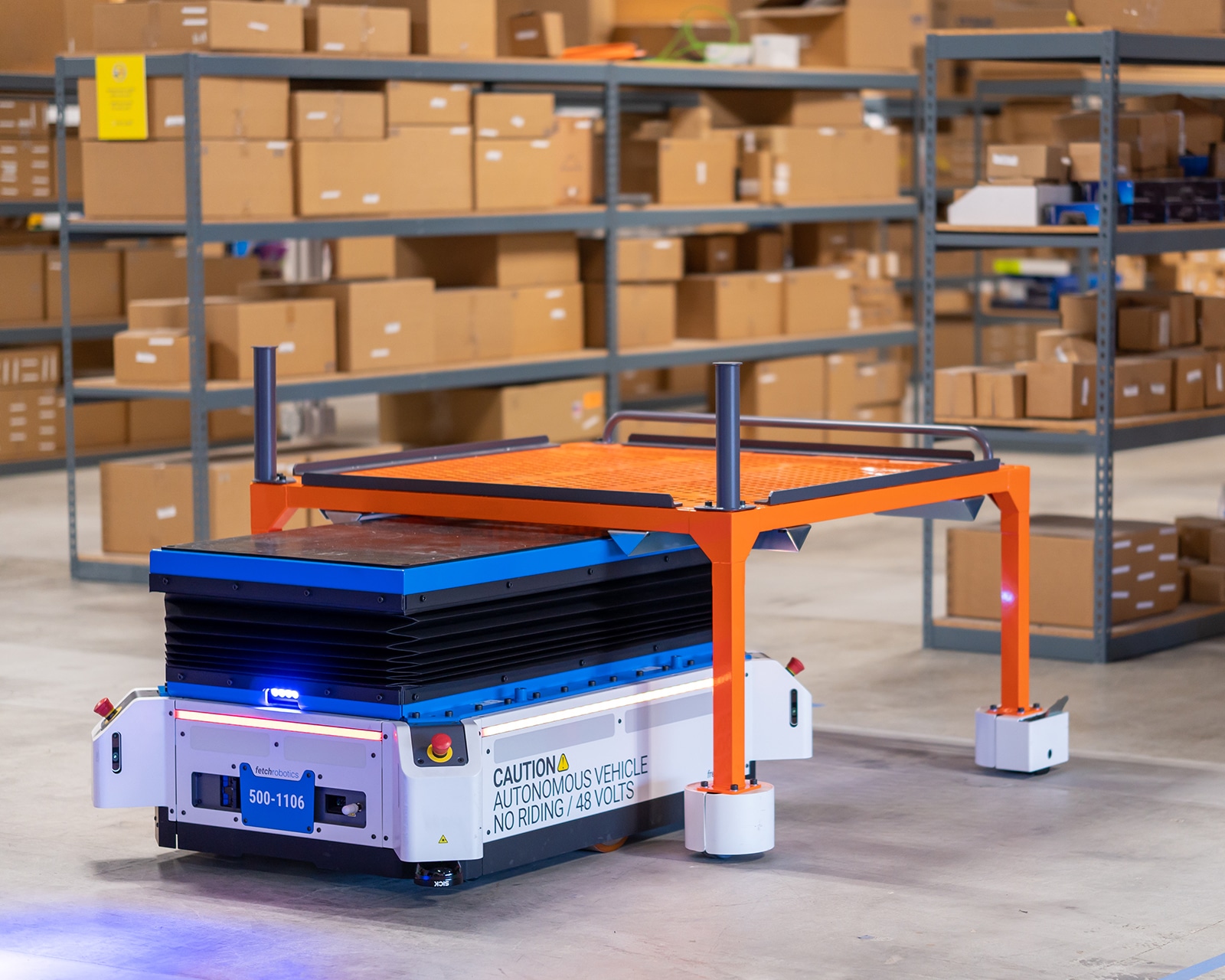
  • Automated guided vehicles (AGVs)

  • Robotic delivery systems

  • Conveyor systems

Principles of Material Handling

Because of the complexity and accuracy required in material handling, companies use ten well-known principles in their material handling processes. 

You want to keep operating costs low – and the proper material handling processes can help you do so. But poor planning and management can cost you. Employees and leadership at your company should know and execute on the following principles to promote efficiency and safety:

  1. Planning: Every handling operation is defined by a deliberate plan outlining needs, objectives, technologies, and functional specifications.

  2. Standardization: All methods, equipment, controls, and software are standardized within limits.

  3. Work: Material handling processes are simplified to eliminate unnecessary movement without losing productivity.

  4. Ergonomics: Companies adjust working conditions to work with the abilities of workers, including reducing excess labor and promoting safety

  5. Unit load: Unit loads are designed to maximize efficiency in the material flow. For example, moving individual items as a single load takes less effort than doing so separately. 

  6. Space utilization: Material handling processes maximize the use of space and maintain organization in any facility.

  7. System: Material movement and storage operations are coordinated to form a system throughout the entire supply chain process. 

  8. Automation: Automation is encouraged whenever possible to enhance efficiency, consistency, predictability, and lower costs. 

  9. Environment: Environmental impact and energy use are considered, and alternatives are implemented when possible. Safe handling of hazardous materials is prioritized.

  10. Life cycle cost: Economic analysis covers the full life cycle of equipment, from installation to disposal.

Improving Your Material Handling System Efficiency with the Right Equipment

Improve operational efficiency, lower costs, and maximize customer satisfaction with the right solutions. At Nutting, we offer products with industry-leading durability and dependability to help you get the job done. Contact us today to streamline your facility.

Supercharge Safety and Efficiency with Nutting Carts & MasterMover Electric Tuggers

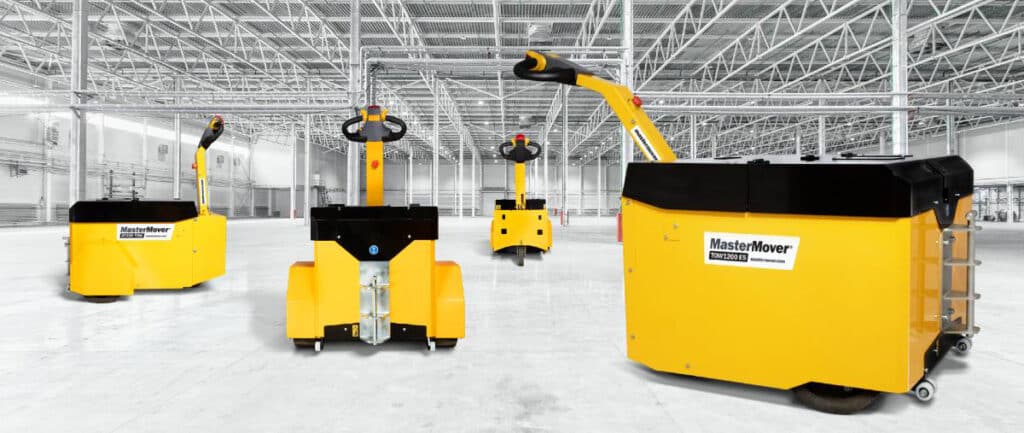
Carts enable industrial manufacturers to benefit from improved operational efficiency and greater flexibility. Nutting carts and trailers’ flexibility is integral to meeting demand in various industries and maximizing efficiency. However, recognizing the need to combine dependable industrial carts with safe material handling equipment, we’ve expanded our product range to include MasterMover electric tuggers – machines specifically designed to move heavy-wheeled carts, supercharge efficiency, and improve safety.

What is an electric tugger?

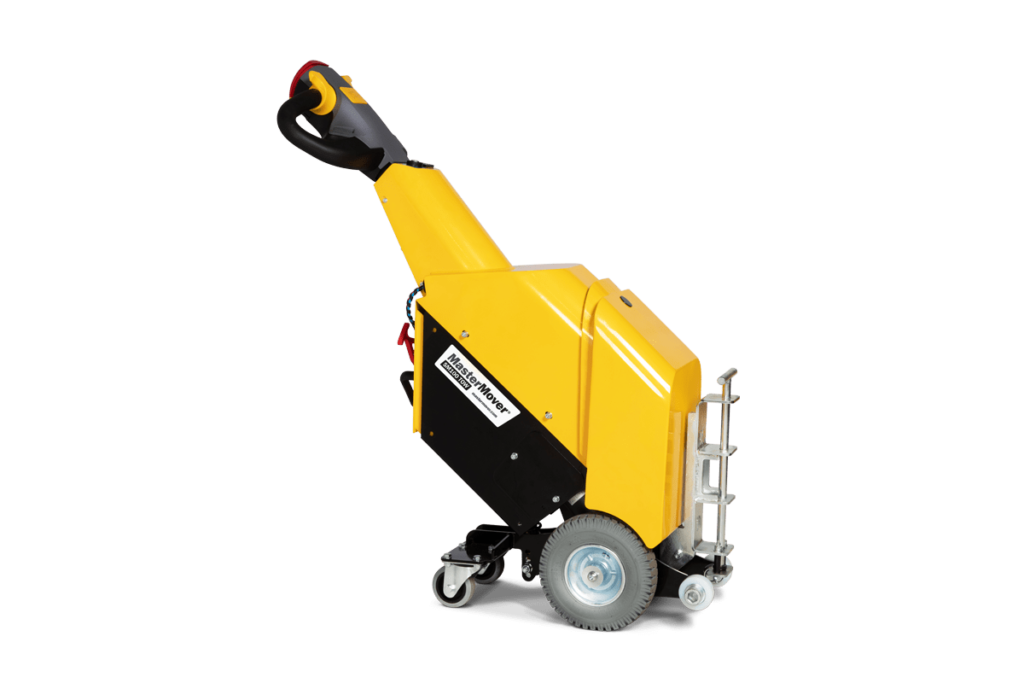
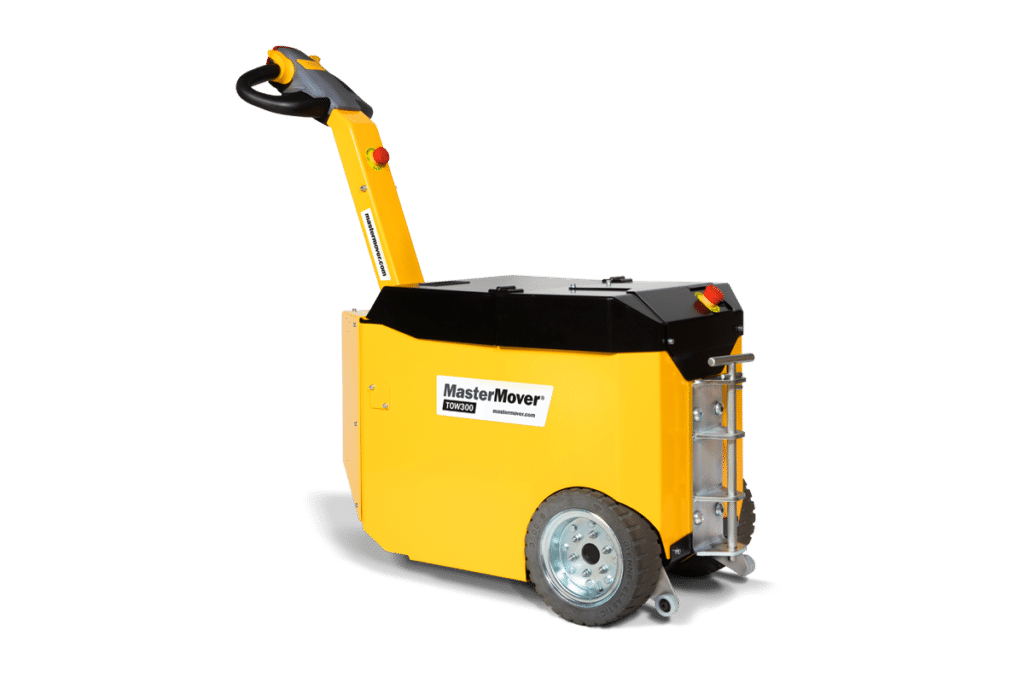
Electric tuggers, also known as electric tow tuggers and powered tuggers, are battery-powered machines designed to move heavy loads such as raw materials, high-value equipment and other resources in industrial manufacturing environments.


Purpose-built to deliver the safe and controlled movement of heavy industrial loads weighing in excess of 66,000 lbs, electric tuggers are the perfect fit for businesses looking to streamline their material handling processes. 

Whether it’s in removing manual handling in the movement of loads, or in creating fork-free environments, powered tuggers enable manufacturers to improve safety and supercharge operational efficiency. 


Benefits of electric tuggers

 License-free operation

 Improve workplace safety

 Drive operational efficiency 

 Safe, secure connection to loads

 Maximum maneuverability 

 Zero emissions

How do electric tuggers work?

Electric tuggers are machines used to move heavy loads in warehouses and factories. Like electric vehicles, they operate on batteries that store energy and power the machine’s motor, allowing it to move. These batteries can be recharged using a cable, like charging a phone or laptop.


However, the battery power alone is insufficient for the tugger to move heavy loads. The machine also generates traction, the force that allows the wheels or tracks to grip the ground and move the load. This traction is critical to the movement of the electric tugger, which allows it to move such heavy weights.


The motor powers the wheels or tracks, and the traction allows the machine to grip the ground, move forward or backward, and turn and change direction. By combining battery power and traction, these machines can handle large loads and are essential to many industrial operations.

Nutting & MasterMover – The Perfect Connection

As an experienced supplier of custom industrial carts and trailers, we’ve built a solid reputation for quality and expertise. 


Businesses need flexible and efficient material handling processes and solutions that prioritize operator safety. Complementing our range of industrial carts with MasterMover’s electric tuggers allows our customers to benefit from a total material handling solution.

SmartMover 

The SmartMover range of electric tuggers is ideal for moving wheeled loads weighing up to 4,400 lbs. Boasting a compact design, the range is ideally suited to working in congested or busy environments. The SmartMover range delivers complete control with secure hydraulic coupling options and ensures loads are moved safely and securely. 

MasterTow 

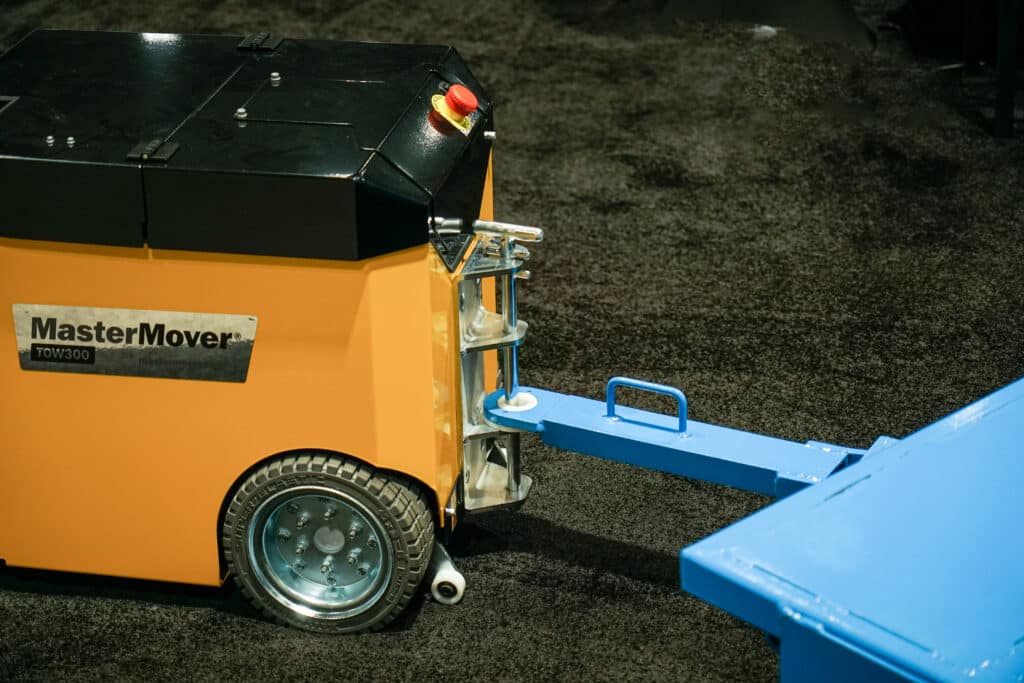
The MasterTow range combines heavy-duty performance with total ease of use. Delivering the powerful movement of heavy loads weighing up to 44,000 lbs, the MasterTow range suits working in the most demanding environments. Connecting to even the heaviest loads with an easy-to-use pin hitch has never been easier.

How electric tuggers & Nutting tugger carts work together

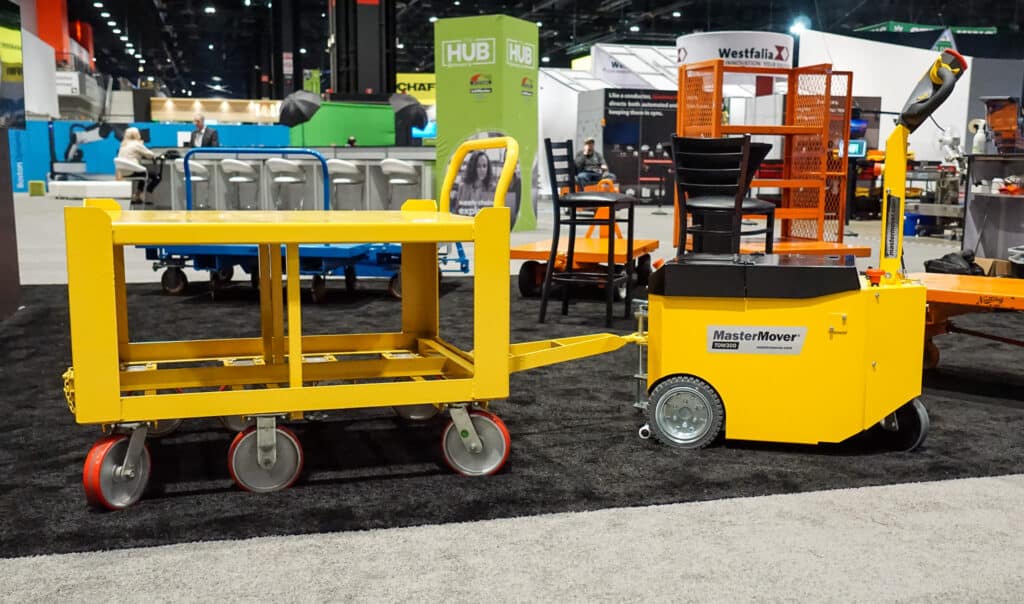
Our range of industrial tugger carts are designed to work alongside MasterMover electric tuggers. Electric tuggers prioritize load security and safety, so you can rest easy knowing any hitch system will deliver complete control when moving a cart.

Whether you’re looking to implement a tugger train system and link multiple carts together or safely move heavy individual carts, electric tuggers guarantee the safe, secure, and efficient movement of wheeled loads. 

Don’t Let Electric Tuggers Be an Afterthought 

Our customers need safe, efficient, and simple material handling solutions to facilitate the movement of our industrial carts. Often, businesses invest in cart and dolly systems without considering how they will be moved. This can sometimes lead to the misuse of existing factory equipment to move the carts, resulting in the risk of accidents. Likewise, without the correct equipment designed to move wheeled carts, the benefits of maneuverability and flexibility of industrial carts can’t be realized. 

When investing in an industrial cart, whether that’s a single unit or an entire fleet, it’s important to consider how it will be moved early on in the process. This enables you to incorporate any required hitch or castor configuration into the design, ensuring any solution fully meets your requirements. 

The benefit of specifying electric tuggers at the beginning of your cart purchase is that you ensure complete compatibility with your cart and benefit from a solution that will get to work straight out of the box. 

Your partner of choice for total material handling solutions

Combining our industrial carts with MasterMover electric tuggers means you can benefit from a total intralogistics solution – even for loads weighing up to 44,000 lbs! 

Contact our Nutting Carts and Trailers team today to learn more about our electric tuggers and how they can benefit your business.

Milk Run Logistics: A Guide to Efficient Warehouse Management

Logistics management is critical to the success of any business that involves the transportation of goods. One popular approach to logistics management is the “milk run” approach, which involves consolidating multiple orders into a single trip. This approach has become increasingly popular in warehouse management because it can increase efficiency and reduce costs.

In this article, we will explore the concept of milk run logistics in detail. We will discuss the benefits of this approach, how it works, and how to implement it in your warehouse management strategy.

Table of Contents

  1. Introduction

  2. What is Milk Run Logistics?

  3. Advantages of Milk Run Logistics

  4. Disadvantages of Milk Run Logistics

  5. Implementing Milk Run Logistics in Your Warehouse

  6. Conclusion

  7. FAQs

1. Introduction

The Milk Run system plays a crucial role in lean process implementation, as it goes beyond a single delivery and becomes part of a larger framework. To truly maximize its effectiveness, it requires years of practice and continuous modifications. Many organizations, including those working with Nutting, have successfully integrated milk run routes into their material handling practices. By utilizing the milk run concept, businesses can design custom-tailored material handling carts to efficiently deliver any materials within a milk run route. This comprehensive approach ensures that the Milk Run system contributes significantly to streamlining processes, reducing waste, and improving overall efficiency within the organization.

2. What are Milk Run Logistics?

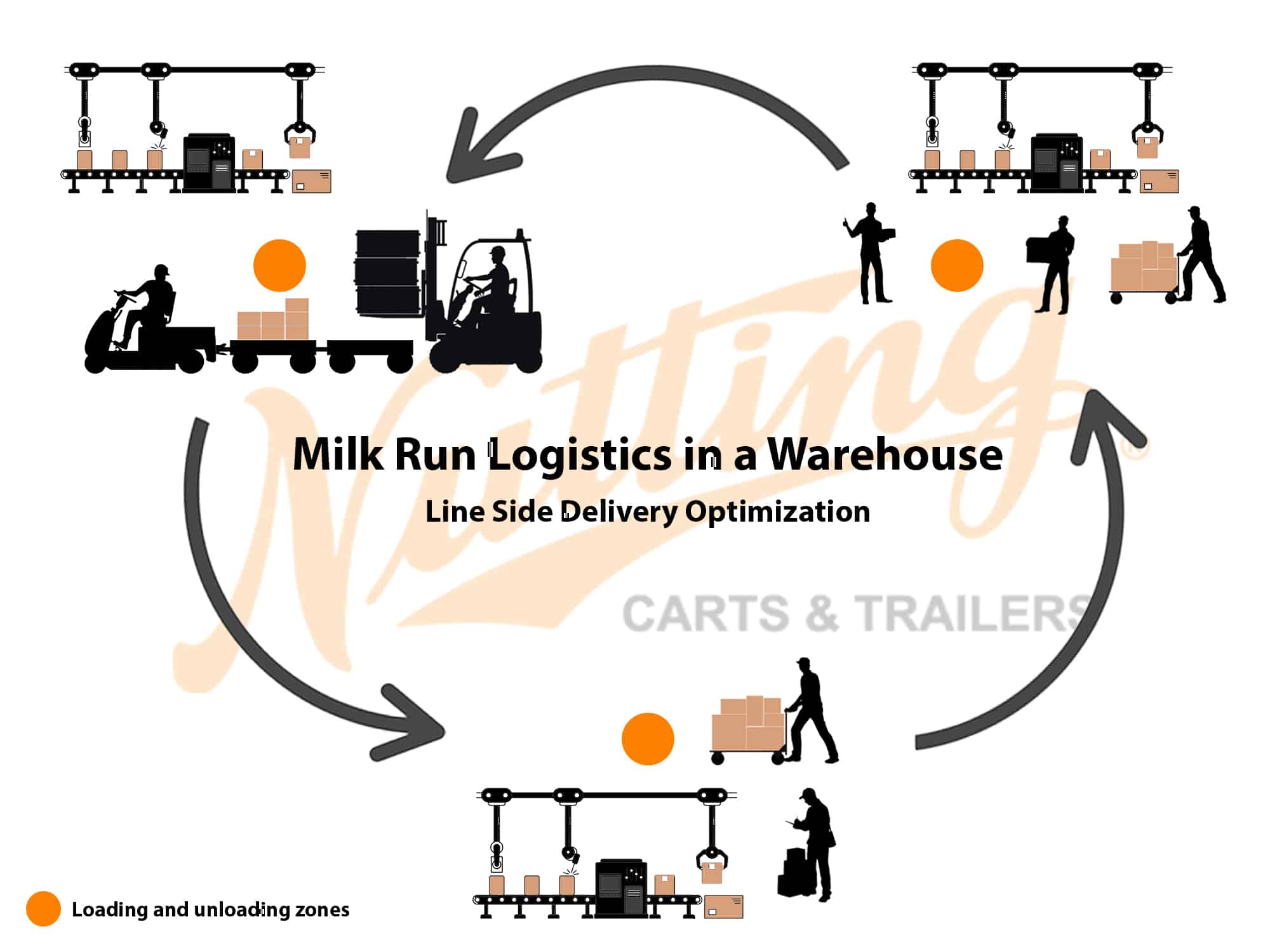
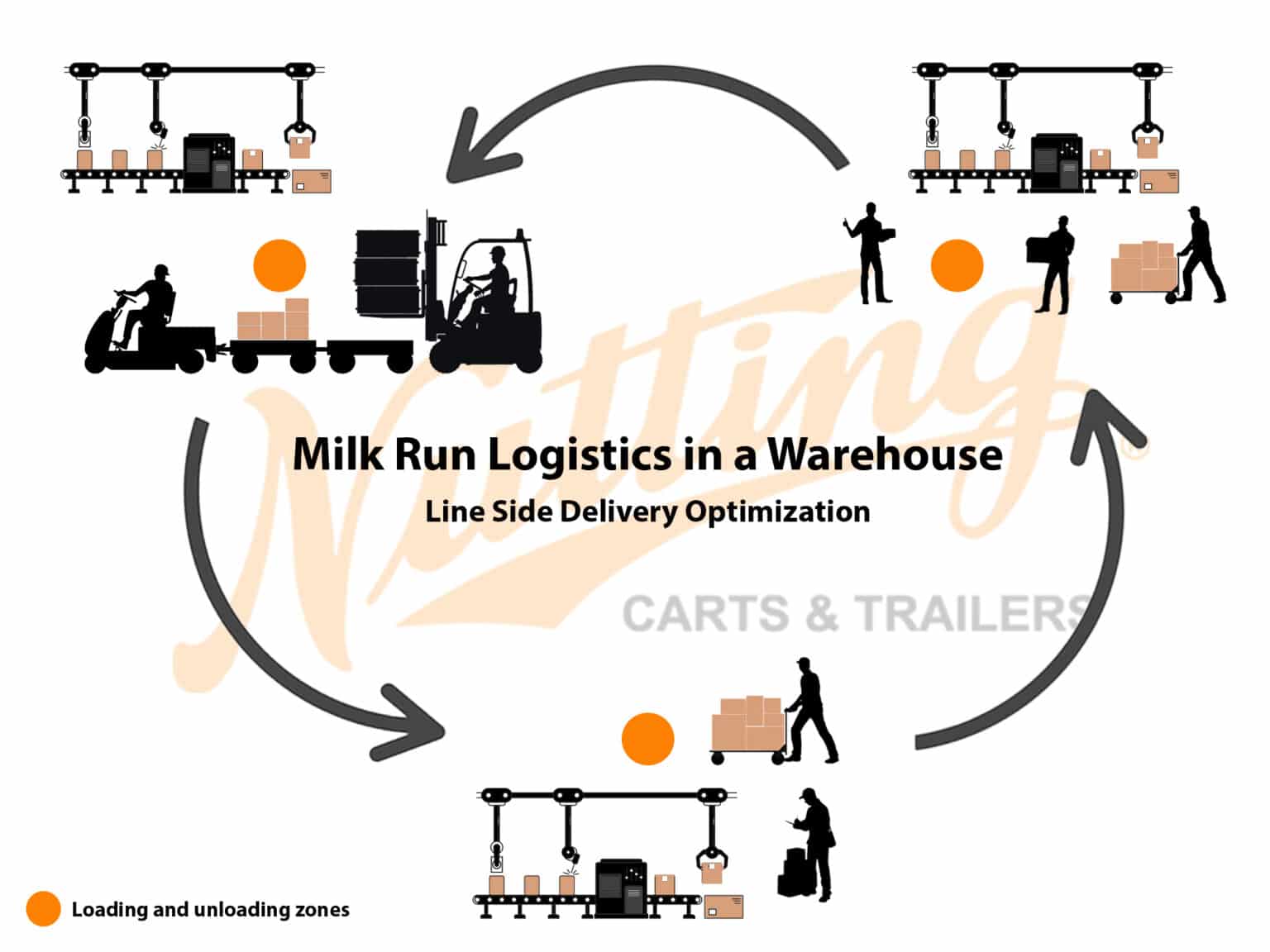
Milk run logistics is a system for optimizing delivery and transportation processes within a warehouse or manufacturing facility. It involves using a centralized delivery schedule, typically managed by a warehouse management system (WMS), to coordinate the pickup and delivery of goods in a predetermined sequence. The milk run logistics system is designed to collect materials or products from various points in a facility and transport them to a central location in a single trip. This approach can significantly reduce the trips required to move materials and products, saving significant time and cost.

The milk run logistics system typically relies on a fleet of specially designed vehicles, such as tugger trains or carts, to move materials and products around the facility. These vehicles are designed to transport multiple items simultaneously, reducing the need for multiple trips and increasing efficiency. A common cart type in milk run logistics are custom mother daughter carts. Additionally, the milk run logistics system typically involves using designated pickup and delivery points throughout the facility, which are clearly marked and easily accessible. This ensures that the entire process is streamlined and efficient, from start to finish. Overall, milk run logistics is an excellent way to optimize material and product transportation within a facility, reducing waste and increasing efficiency.

Milk Run Logistics with Nutting Carts

3. Advantages of Milk Run Logistics

Improved Efficiency and Reduced Costs

Milk run logistics helps to optimize the delivery process by consolidating multiple orders into a single delivery route. This results in more efficient use of transportation resources and reduces overall transportation costs. Additionally, because milk run logistics relies on regular deliveries, it reduces the need for storage space in the warehouse, which can lead to cost savings.

Reduced Lead Times

Because milk run logistics operate regularly, it can reduce the lead time between order placement and delivery. This can improve customer satisfaction by ensuring that orders are delivered on time and in full.

Increased Flexibility

Milk run logistics allows for more flexibility in the delivery schedule, as it can be adjusted to accommodate changes in demand or production schedules. This can help to reduce the impact of unexpected events, such as delays in production or changes in customer demand.

Improved Communication and Coordination

Milk run logistics requires close coordination between the warehouse, transportation providers, and customers. This can improve communication and collaboration between these groups, leading to more effective problem-solving and decision-making.

4. Disadvantages of Milk Run Logistics

While there are many advantages to using milk run logistics, there are also some potential disadvantages. These include:

Increased Complexity

Milk run logistics requires close coordination between multiple parties, including the warehouse, transportation providers, and customers. This can increase the complexity of the logistics process and require more resources to manage.

Higher Upfront Costs

Implementing a milk run logistics system can require upfront technology, equipment, and personnel investments. This can lead to higher costs in the short term, although long-term savings may offset these costs.

Reduced Flexibility

While milk run logistics can increase flexibility in some areas, it can also reduce flexibility in others. For example, because deliveries are made regularly, it may be more challenging to accommodate last-minute changes or unexpected demands.


5. Implementing Milk Run Logistics in Your Warehouse

If you are interested in implementing milk run logistics in your warehouse, there are several steps you can take:

Analyze Your Orders

Analyzing orders is crucial to implementing a successful milk run logistics system. By analyzing orders, a company can determine which products are in higher demand and adjust its delivery schedule accordingly. This can lead to more efficient use of resources, as products can be delivered more timely and cost-effectively. Additionally, analyzing orders can help identify any issues with product availability or quality, allowing for quick resolution and preventing delays in the supply chain. Analyzing orders is a valuable tool for optimizing milk run logistics and ensuring the system meets the company’s and its customers’ needs.

Plan Your Route

Planning your route is crucial when implementing milk run logistics in a warehouse. Proper planning may optimize the route, leading to saved time, increased costs, and reduced efficiency. Planning the route involves identifying the most efficient order to pick up and drop off goods, determining the best sequence of stops, and ensuring that the route is feasible based on the capacity of the delivery vehicle. By carefully planning the route, a company can ensure its milk run system is as efficient as possible, with minimal waste and maximum productivity. Additionally, route planning can help identify potential issues or bottlenecks in the system, allowing for proactive adjustments to improve performance. Proper route planning is essential for the success of milk run logistics in a warehouse.

Train Your Drivers Training your drivers is crucial to implementing milk run logistics in a warehouse. These drivers are critical in ensuring the milk run system runs smoothly and efficiently. It is essential to ensure that drivers are trained on the specific requirements of the milk run system, such as the delivery schedule, route planning, and inventory management. Drivers should also be familiar with the warehouse layout and be able to navigate it efficiently. Additionally, training should emphasize safe and responsible driving practices to prevent accidents and ensure the safety of everyone in the warehouse. By providing comprehensive training to your drivers, you can ensure that they are equipped with the necessary skills and knowledge to effectively execute the milk run system and contribute to the overall success of the logistics operation.

Monitor Your Results

Monitoring the results of implementing milk run logistics is crucial for the system’s success. It allows the company to identify issues or inefficiencies and make necessary adjustments. By tracking the system’s performance, the company can measure its effectiveness by reducing transportation costs, improving inventory management, and enhancing productivity. Regular monitoring of the milk run logistics system also enables the company to identify opportunities for improvement, make data-driven decisions, and ensure continuous supply chain optimization. Without proper monitoring and evaluation, the system may not achieve the desired results, leading to a waste of resources and a negative impact on the company’s bottom line.

Conclusion

Milk run logistics is a powerful tool for improving efficiency and reducing costs in a warehouse. By consolidating multiple orders into a single delivery route, milk run logistics can reduce transportation costs and lead times, increasing flexibility and improving communication and coordination. However, it is crucial to weigh the potential disadvantages, such as increased complexity and reduced flexibility, when considering whether to implement a milk run logistics system.

Frequently Asked Questions


Q: What are milk run logistics?

A: Milk run logistics is a delivery system that consolidates multiple orders from various customers or suppliers and transports them together in a single trip. This system is also known as multi-stop distribution, shuttle-run delivery, or loop-run delivery.


Q: How does milk run logistics work in a warehouse?

A: In a warehouse, milk run logistics involves a delivery truck making multiple stops to pick up or drop off items at various locations. The truck follows a predetermined route and schedule, with each stop being timed to ensure timely delivery. The truck may also make additional stops at other suppliers or customers to pick up or drop off additional items.


Q: What are the benefits of using milk run logistics?

A: Using milk run logistics can result in reduced transportation costs, improved delivery times, and increased efficiency in warehouse operations. By consolidating multiple deliveries into a single trip, companies can reduce their carbon footprint and promote sustainability.


Q: What are the potential disadvantages of milk run logistics?

A: The potential disadvantages of milk run logistics include increased complexity in planning and scheduling, longer lead times, and the risk of delays if one customer or supplier is not ready for pickup or delivery. Optimizing the route to minimize transportation time and costs can also be challenging.


Q: How can a company decide whether to implement a milk run logistics system?

A: Companies can evaluate the benefits and drawbacks of milk run logistics against their specific business needs and determine whether it is the most efficient and cost-effective delivery system for their operations. Factors to consider include the number of suppliers and customers, the volume and frequency of deliveries, and the distance between delivery locations. Companies may also consider conducting a pilot test before implementing a full-scale milk run logistics system.


Mother Daughter Carts: Maximizing Line-Side Delivery

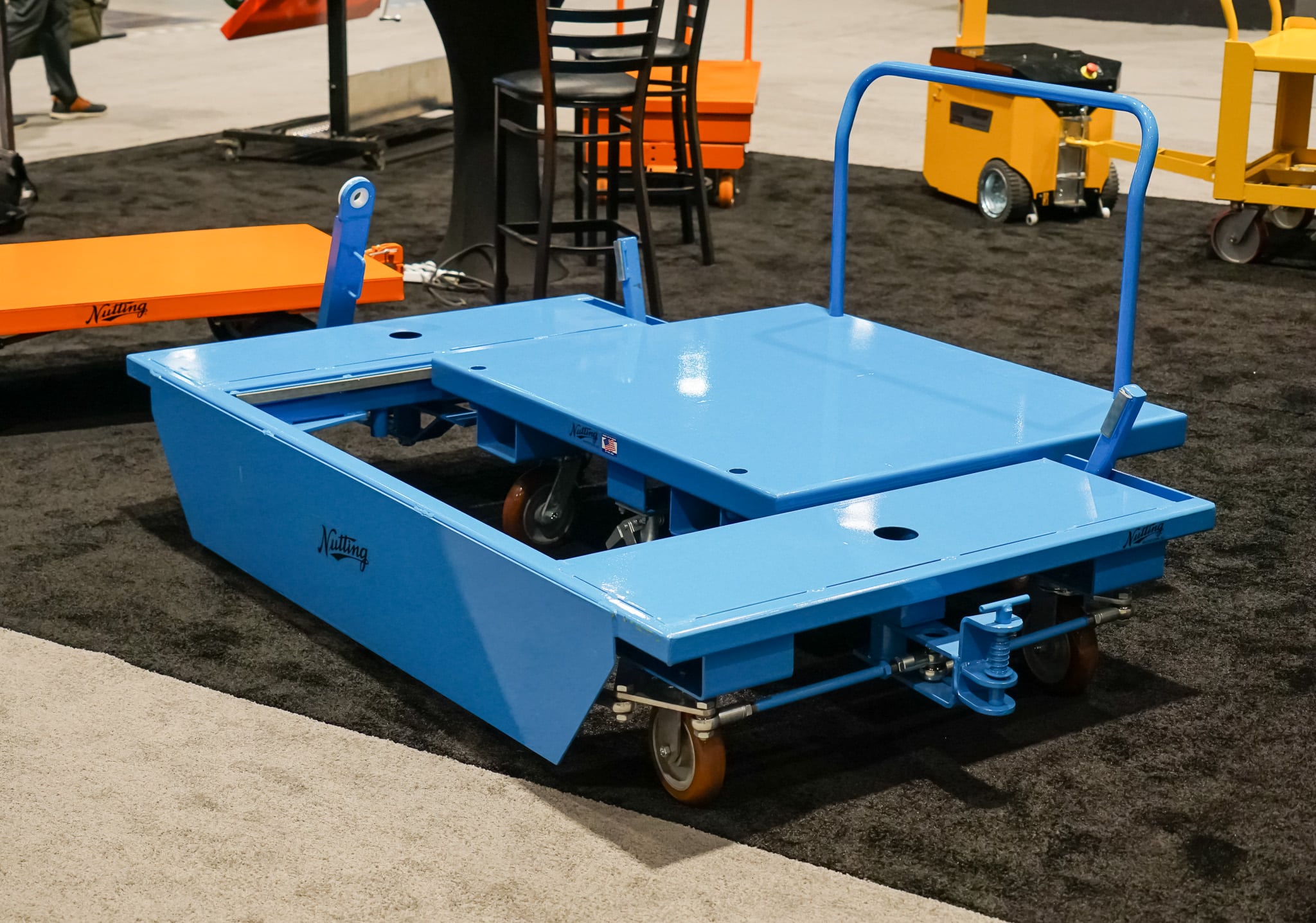
Mother Daughter Carts are a unique solution for line-side delivery in warehouses and manufacturing facilities. They consist of a mother frame cart and one or more daughter delivery carts that nest within the mother frame. The daughter carts can be locked within the mother cart, and the mother and daughter carts can be tugged as one tugger cart. This makes them a versatile and efficient solution for delivering materials and supplies to production lines.

Introduction to Mother Daughter Carts

Mother Daughter Carts are a unique solution for line-side delivery in warehouses and manufacturing facilities because of their versatility and efficiency. They are designed to meet the specific needs of the delivery process, from the size and weight of the materials being transported to the facility’s layout.

The mother frame cart serves as the primary cart in the system, providing a sturdy and stable base for the daughter carts to nest within. The daughter carts can be easily inserted and locked within the mother frame cart, creating a secure and stable unit for delivery. This feature also makes it easy to transport multiple daughter carts at once, saving time and effort in the delivery process.

The ability to tug the mother and daughter carts as one tugger cart is another critical advantage of this system. This allows for easy and efficient movement of materials throughout the facility, even in tight or narrow spaces. By eliminating the need for multiple trips or transfers between carts, the Mother Daughter Carts system can significantly reduce delivery times and improve productivity.

Benefits of Using Mother Daughter Carts

There are several benefits to using Mother Daughter Carts in your warehouse or manufacturing facility.

Versatility

The framework of the carts can be designed to accommodate various types of daughter carts, making it a versatile solution for line-side delivery. When we say that the framework of the carts can be designed to accommodate various types of daughter carts, the mother cart frame can be customized to fit different sizes and shapes of daughter carts. This makes the mother cart a versatile solution for line-side delivery, which delivers materials and supplies directly to the production line.

For example, a manufacturer may have different daughter cart types used for different purposes, such as carrying raw materials, finished products, or tools and equipment. By designing a mother cart frame that can accommodate different types of daughter carts, the manufacturer can use the same mother cart for multiple purposes instead of having to invest in separate carts for each type of daughter cart.

This versatility is essential for line-side delivery because it allows manufacturers to be more flexible and adapt to changing needs. They can easily switch out daughter carts as needed without purchasing additional mother carts. It also helps to minimize the amount of space needed for cart storage, as the same mother cart can be used for multiple daughter carts.

Overall, the versatility of mother carts in accommodating different types of daughter carts makes them a popular solution for line-side delivery in many industries.

Efficiency

Mother and daughter carts can be tugged as one tugger cart, saving time and increasing efficiency. In addition to the efficiency gained from tugging mother and daughter carts together as one unit, it is simple to connect multiple mother daughter tugger carts to form a tugger train system. This further increases efficiency and allows for simultaneously moving larger quantities of materials or products.

When multiple mother daughter tugger carts are connected, they can be pulled by a single operator, reducing the number of trips required to move materials or products from one location to another. This can save time and increase productivity, especially in extensive manufacturing facilities or warehouses where there is a need to move large quantities of goods over long distances.

The tugger train system also provides flexibility in terms of routing and delivery. It allows for the movement of materials and products in a continuous flow, which can be easily directed through different production areas or warehouses without the need for constant rearrangement of carts. This helps to reduce the time and effort required to transport goods and ultimately improves the overall efficiency of the manufacturing process.

Another benefit of the tugger train system is that it can be easily scaled up or down depending on the operation’s needs. Additional mother daughter tugger carts can be added or removed from the train as required, making it a flexible and adaptable solution for different manufacturing environments.

Customization

This system can be customized to meet your specific needs, including the size and number of daughter carts. Customization is a critical aspect of mother and daughter carts that allows them to be tailored to meet the specific requirements and needs of different manufacturing environments. With customization, the carts can be designed to meet the exact specifications needed, including the size and number of daughter carts, custom structures added to the daughter carts, and mother cart steering types.

One significant customization option is the size and number of daughter carts. Different manufacturing facilities may require daughter carts of varying sizes, shapes, and load capacities to transport different types of materials or products. Customization of the size and number of daughter carts ensures that the carts fit securely within the mother cart frame and can transport materials or products efficiently and safely.

Another important customization option is the addition of custom structures on the daughter carts. Depending on the materials or products being transported, custom structures such as bins, shelves, and racks can be added to the daughter carts to secure better and protect them. This can improve the safety of the products or materials being transported and increase transportation efficiency.

Mother cart steering types can also be customized to meet specific needs. For example, some mother carts can be designed with front-wheel steering, while others may have four-wheel steering. Customizing the steering type of mother carts can improve the maneuverability of the carts in different environments, such as tight spaces or narrow aisles.

Integration with Milk Run Logistics

Mother Daughter Carts are a highly versatile and customizable material handling solution that can be integrated with various logistics strategies to optimize warehouse operations. One such strategy is Milk Run logistics, which involves using a single vehicle to make multiple stops to pick up and deliver materials and supplies.

Mother Daughter Carts are an excellent choice for Milk Run logistics because they allow for minimal downtime during loading and unloading operations. Operators can quickly detach an empty daughter cart, then load a full daughter cart to continue the milk run, reducing the time spent waiting for loading and unloading.

Nutting Carts help to optimize milk run logistics
Unloading and loading times at workstations can be optimized with Milk Run Logistics and Nutting Mother Daughter Carts

This seamless transition between daughter carts allows for a continuous flow of materials and supplies, reducing delays and increasing efficiency in the delivery process. Additionally, the flexibility of Mother Daughter Carts allows for customization of the number of daughter carts needed for each delivery stop, ensuring that the vehicle can handle the specific needs of each delivery route.

By integrating Mother Daughter Carts with Milk Run logistics, manufacturers can further streamline their delivery process and increase efficiency in their warehouse operations. This integration can help reduce transportation costs, improve delivery times, and minimize unnecessary movements of vehicles in the warehouse, resulting in a more efficient and cost-effective material handling system.

Overall, the combination of Mother Daughter Carts and Milk Run logistics is an excellent example of how modern logistics strategies and material handling solutions can work together to optimize warehouse operations and improve business outcomes.

How to Implement Mother Daughter Carts in Your Warehouse

Implementing Mother Daughter Carts in your warehouse or manufacturing facility is often a straightforward process. Here are some steps to consider:

  • Identify your specific delivery needs and determine the required number and size of daughter carts.

  • Choose the appropriate type of tugger train system for your facility.

  • Design the mother frame cart and daughter carts to meet your exact needs, including any necessary features or compartments.

  • Test the carts in your facility to ensure they are functioning properly and efficiently.

  • Train your staff on using the carts safely and integrating them into your warehouse operations.

Mother Daughter Carts are a highly versatile and customizable material handling solution that significantly optimizes line-side delivery in manufacturing facilities. Their unique design allows for the easy nesting of daughter carts within mother cart frames, saving valuable space and increasing efficiency in material handling operations.

Overall, Mother Daughter Carts are an excellent example of how modern material handling solutions can optimize line-side delivery operations, reduce downtime, and enhance efficiency in manufacturing facilities. By incorporating them into their material handling processes, manufacturers can take advantage of their many benefits and achieve better business outcomes.

Finding an Expert Utility Cart Manufacturer

We’ve put together a list of the factors to consider when choosing a manufacturer for your material handling equipment, such as pallet and utility carts.


Material handling carts are essential for a wide range of industries, from manufacturing and automotive to food service and retail. And employing the right carts can help improve efficiency and productivity in your business. But with so many utility cart manufacturers to choose from, how do you know which one to pick?

Here are some factors to consider when choosing a manufacturer for your material handling equipment:

Material Quality

When choosing a manufacturer, consider the quality of the materials used in their products. The manufacturer should use high-quality products like stainless steel materials, powder-coated finishes, and corrosion-resistant coatings, so your products last longer and require less maintenance.

Load Capacity

You need to know that your carts can handle the weight of what you need to transport, so in selecting a manufacturer, it’s important to consider their products’ load capacities. Whether you’re using them for pallets, totes, or stock carts, make sure the manufacturer you’re working with can provide carts that meet your material handling requirements.

Ergonomics

Ergonomic designs reduce the risk of injury and improve productivity. Look for manufacturers who design with ergonomics in mind and offer custom solutions to fit the needs of your workforce. Here are a few ergonomic design considerations to look for in a manufacturer’s product line:

Adjustable handles

Adjustable cart handles can help accommodate different operators’ heights and arm lengths, reducing strain and fatigue.

Swivel casters

Swivel casters can be added to the cart to make it easier to maneuver in tight spaces.

Tilted shelves

Steel shelves can be designed to tilt at an angle, making it easier to access items on the cart and reducing the need for awkward reaching and bending.

Pneumatic tires

Pneumatic tires can be added to the cart to absorb shocks and vibrations when moving heavy loads, reducing the risk of injury and fatigue.

Height-adjustable decks

Decks can be made to adjust in height to allow for comfortable loading and unloading of materials.

Power-assisted features

Some carts can be designed with power-assisted features like electric motors or hydraulic lift systems to reduce the amount of manual labor required to move heavy loads.

Warranty

A warranty is a sign of reliability and accountability. Consider choosing a manufacturer that offers at least a one-year warranty, so you’re covered in case of defects or issues.

Product Line

A manufacturer with a broad product line can offer you more options and customized solutions for your specific needs. Look for manufacturers that offer different types of carts, including:

  • utility carts

  • platform trucks

  • service carts

  • order picker carts

  • stock carts

  • custom material handling carts

Lead Time

The lead time is the time it takes for the manufacturer to produce and deliver your carts. Be sure to clarify the lead time for the carts you need ahead of time and choose a manufacturer that can meet your timeline. Some manufacturers even offer rapid ship products with expedited lead times for tight schedules.

Quality Management

ISO 9001 is a quality management standard that guarantees the manufacturer follows standardized processes to deliver high-quality products. Look for manufacturers that are ISO 9001 certified to feel confident knowing their processes meet industry standards.

Durable Design

If you’ll be using your carts in wet or harsh environments, choose a manufacturer that offers high-quality stainless steel carts with a high level of corrosion and rust resistance, so your carts can withstand their environment for years to come.

Customized Solutions

Sometimes a standard model won’t quite meet your needs. That’s where custom solutions come in. A reputable cart manufacturer should be able to provide you with customized options that fit your specific requirements. Here are some things to look for when choosing a cart manufacturer for custom material handling solutions:

Flexibility

A good cart manufacturer should be willing to work with you to understand your unique needs and develop a solution that meets those needs. In addition, they should be able to customize several aspects of your carts, including the size, shape, weight capacity, and features.

Design expertise

Look for a manufacturer with design expertise who can work with you to develop an efficient, ergonomic, and safe custom solution.

Material options

The manufacturer should be able to offer a range of material options, including steel, aluminum, and more. They should also be able to provide different finish options tailored to your specific working environment. 

Quality construction

The manufacturer should have a reputation for producing high-quality carts with durable construction that can withstand heavy and repeated use.

Testing and certification

The cart manufacturer should be able to provide testing and certification to prove that the custom solution meets safety standards and regulations.

Customer service

Choose a manufacturer with a strong reputation for excellent customer service, so you can be confident that you’ll receive support and communication throughout the process, especially for custom orders.

Distributor and OEM

Look for manufacturers with distributors or OEM partnerships that will give you greater access to spare parts and maintenance services as needed.

Nutting Carts and Trailers is a trusted name in the industry, offering a wide range of customizable material handling solutions designed for your unique processes. Our commitment to quality and innovation ensures that each cart we produce is engineered to deliver superior performance and reliability. To learn more about how Nutting can help you, visit our website today.

The Right Industrial Cart for Your Material Handling Operation

Discover how to pick an industrial cart or heavy-duty utility cart that has the right features to maximize the efficiency of your material handling facility.

In today’s fast-paced industrial environment, ensuring the efficient and safe movement of materials and equipment within your facilities is more important than ever. Industrial carts are a great tool to help.

Industrial carts, which can range from heavy-duty models capable of handling large loads to lightweight designs that are easy to maneuver, offer a variety of customizable features, allowing them to be tailored to suit nearly any application.

In this article, we’ll take a closer look at the advantages of industrial carts and how to choose the right cart for your specific material handling operations.

Advantages of Industrial Carts

Industrial carts provide a versatile solution for material handling. They can handle heavy loads, making them suitable for transporting large equipment or items. Swivel casters also offer easy maneuverability, making them optimal for navigating tight corners, hallways, and obstacles. By investing in industrial carts, businesses can streamline operations, reduce workplace injuries, and keep their facilities better organized.

What Are Industrial Rolling Carts Used For?

Industrial carts and trailers are used across a wide variety of industries to improve material handling, organization, and safety. Some common applications include:

Manufacturing

Industrial carts are often used in manufacturing facilities to move materials and equipment through the production process.

Warehousing and Distribution

These utility carts are also commonly used in warehousing and distribution facilities to move products and supplies between different areas of the facility and reduce forklift traffic.

Healthcare

In healthcare settings, industrial carts can transport medical equipment and supplies in hospitals and clinics.

Hospitality

Hotels often use industrial carts to move linens, cleaning supplies, and other items throughout the property.

Retail

Retail stores use industrial carts to move merchandise and supplies between the stockroom and the sales floor.

Food Service

Restaurants and other food service establishments use industrial carts to transport food, dishes, and utensils around prep areas.

Educational Institutions

Schools and universities use industrial carts to move books, supplies, and other materials between classrooms, libraries, and other areas of the campus.

How to Choose the Right Industrial Utility Cart

Depending on their intended use, industrial carts feature different configurations, caster types, and weight capacities, making them highly versatile tools for various applications.

When deciding on which industrial cart is suitable for your operation, here are some crucial factors to consider:

Load Capacity

Make sure the cart you choose can accommodate the weight and shape of the materials you frequently transport or store. Consider whether you will need multiple shelves, locking mechanisms, lipped edges, or any other special features to ensure the safe and efficient transportation of materials and goods throughout your facility.

Facility Space

If your facility features tight corners or hallways, consider the maneuverability of the carts you choose to employ. Be sure to select a model that can accommodate your space.

Wheel Type

If you’re selecting an industrial cart on wheels, you should first assess the terrain in which you will be using your carts to make sure you choose the right wheels for the job.

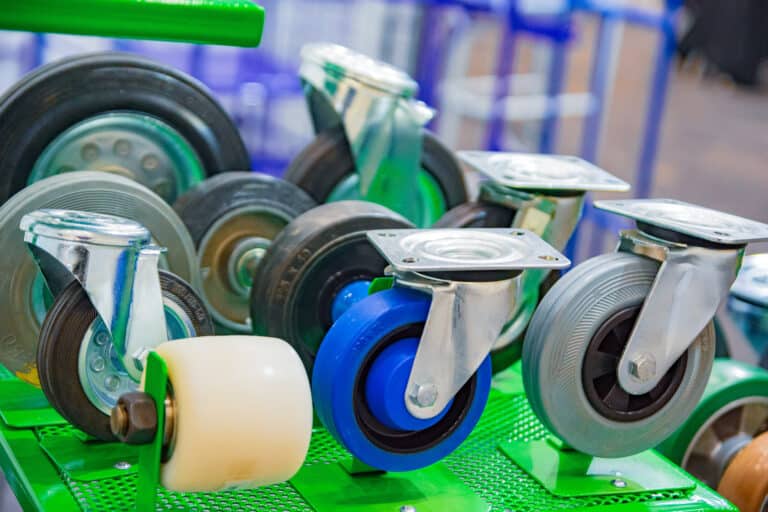
Wheels are typically made of rubber, polyurethane, phenolic, or another heavy-duty material, depending on the surface they frequently traverse.

Pneumatic caster wheels are great for outdoor use or use on uneven surfaces, while hard rubber or polyurethane wheels are ideal for smooth surfaces.

Ergonomic Features

Look for carts that have ergonomic features like adjustable handles, swivel casters, comfortable grips, and other features that can help reduce strain and fatigue for your workers.

Warranty

Ensure the cart you choose has a warranty covering any potential defects or issues.

Types of Industrial Carts

Service Carts

Service carts are designed for use in commercial and institutional settings. They are typically made from stainless steel or other durable materials, making them corrosion-resistant and easy to clean. Service carts often have multiple shelves, allowing them to carry a variety of items at once. Many service carts also have swivel casters, which make them easy to maneuver in tight spaces.

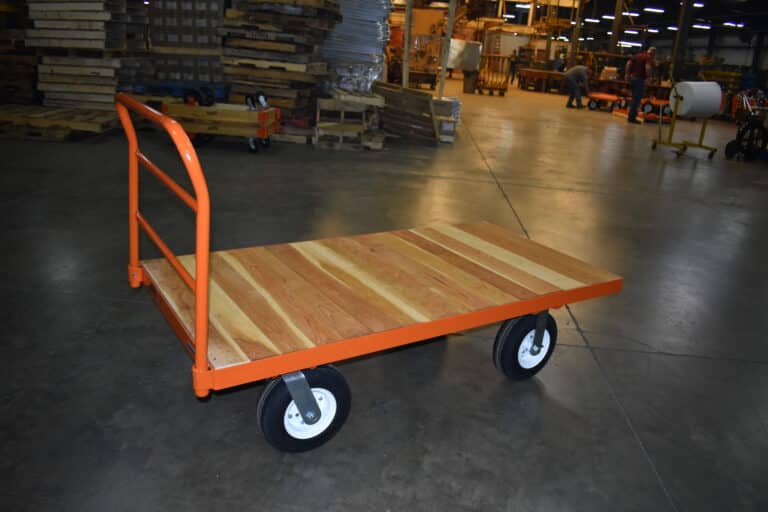
Platform Cart

Platform trucks are designed for transporting heavy loads. They typically feature a flat platform with four wheels and are often used to move items like boxes, furniture, and equipment. These heavy-duty utility carts are available in a variety of sizes and weight capacities, allowing them to be used in a range of applications.

Nutting Platform Truck
Wooden Deck Platform Truck by Nutting

Stock Carts

Stock carts are designed for use in warehouses and other industrial settings. They often have multiple shelves or storage bins, allowing for efficient organization and transport of goods. Many stock carts are also equipped with pneumatic casters, enabling them to easily move heavy loads across uneven surfaces.

Instrument Carts

Designed with the unique needs of healthcare and laboratory settings in mind, instrument carts provide a secure and stable means of transporting medical or laboratory equipment. Instrument carts often have swivel casters, allowing easy movement and positioning.

Plastic Utility Carts

Plastic utility carts are lightweight, easy to clean, and corrosion-resistant. They are often used in food service, healthcare, and educational settings and can transport various items such as food, supplies, and equipment. Many plastic utility carts have top shelves and bottom shelves, allowing for efficient organization.

Dollies 

Dollies are typically low-profile carts designed to move heavy objects or equipment across a flat surface. Some dollies are designed to be used in conjunction with forklifts or other lifting equipment, while others can be used by hand.

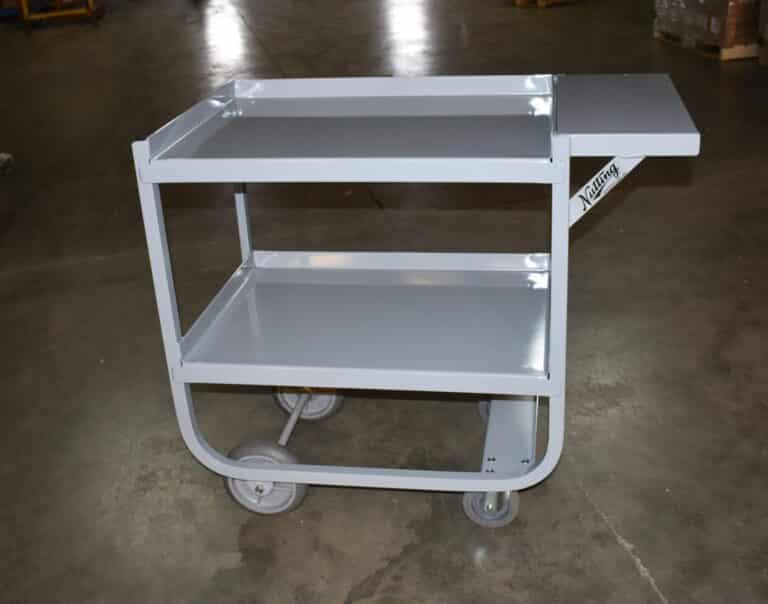
Shelf Utility Carts

Shelf utility carts are designed with multiple shelves and are often used in food service, hospitality, and healthcare settings to store and transport supplies, tools, and equipment. The lipped shelves on these carts are usually adjustable, which allows users to customize the cart.

Shelf Cart
Steel Shelf Cart by Nutting

Rack Carts

Rack carts feature wire or mesh racks and are often used in industrial settings, including warehouses and factories. Their racks can be customized to accommodate specific storage needs.

Storage Carts

Storage carts are designed with drawers, compartments, and/or storage shelves and often feature a locking mechanism for secure mobile storage of sensitive items. They are commonly used in healthcare and laboratory settings to store and transport medical supplies, equipment, or samples.

Flat-Top Carts

Flat-top carts are often used in industrial settings to transport large or bulky items, such as boxes, equipment, or machinery. Flat-top carts with side rails, lipped edges, and other accessories can be customized to prevent items from falling off during transport.

U-Boat Carts

U-Boat carts are designed with a U-shaped platform and are often used in retail settings. The U-shaped design of these carts allows them to be easily maneuvered in tight spaces, making them useful for restocking shelves in crowded retail environments.

Tilt Trucks

Tilt trucks feature a tilting mechanism that lets users quickly offload the cart’s contents into a larger receptacle, making them a popular choice for material handling applications in various industries.

When selecting an industrial cart, it’s essential to consider factors like weight capacity, maneuverability, and wheel type to ensure that the cart will meet your specific needs, helping to streamline your operations, increase productivity, and create a safer and more organized work environment.

To learn more about Nutting’s range of customizable industrial carts, contact our team today.

Quad Steer Carts for Material Handling

How do Quad Steer Carts work?

Learn what quad steer carts are, how they work, and how using this heavy duty material handling tool can improve the efficiency of your warehouse.

Quad steer carts are a type of industrial cart that has four-wheel steering capability, which allows for a tight turn radius and greater flexibility in navigating through tight spaces. In addition, the front and rear wheels turn in sync, providing smoother and more accurate tracking compared to traditional two-wheel steer carts. This design allows for improved accuracy in cart positioning and makes material handling operations more efficient and effective.

These heavy-duty material handling carts can be linked in a train and used with virtually any tugger, including automated guided vehicles (AGV).

Popular Cart Options 

Nutting Carts and Trailers offer various popular quad-steer cart options that cater to different industrial needs. These options include:

Link Caster Steer Carts

Link caster steer carts are a popular choice for businesses looking for enhanced maneuverability and flexibility in material handling. These carts feature a link caster steering mechanism that allows for smooth and precise steering, making them ideal for navigating tight spaces and complex layouts. With the ability to transport multiple carts in a train-like fashion, link caster steer carts offer a versatile solution for various industrial applications.

Mother Daughter Carts

Mother daughter carts, another popular option from Nutting Carts and Trailers, are designed for efficient and organized material handling processes. These carts are configured so that one cart (mother) can carry another cart (daughter), optimizing the transportation of goods within a facility. Mother daughter carts are known for their space-saving design and the ability to handle different load capacities, making them a practical choice for businesses looking to streamline their operations.

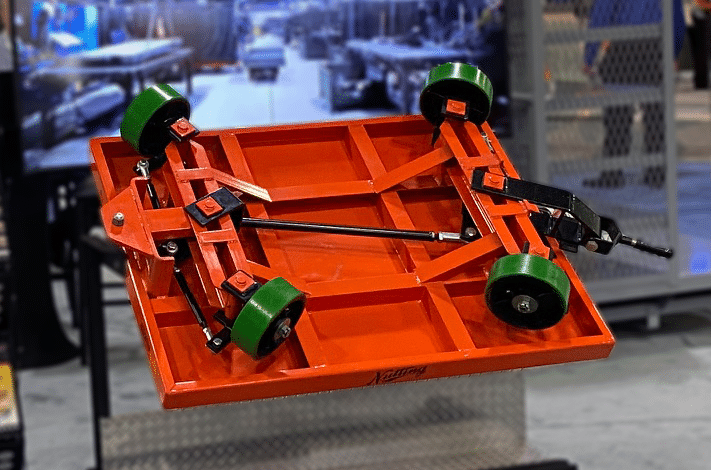
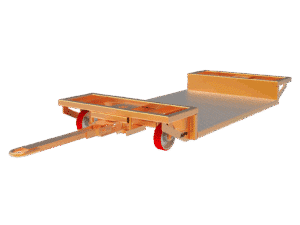
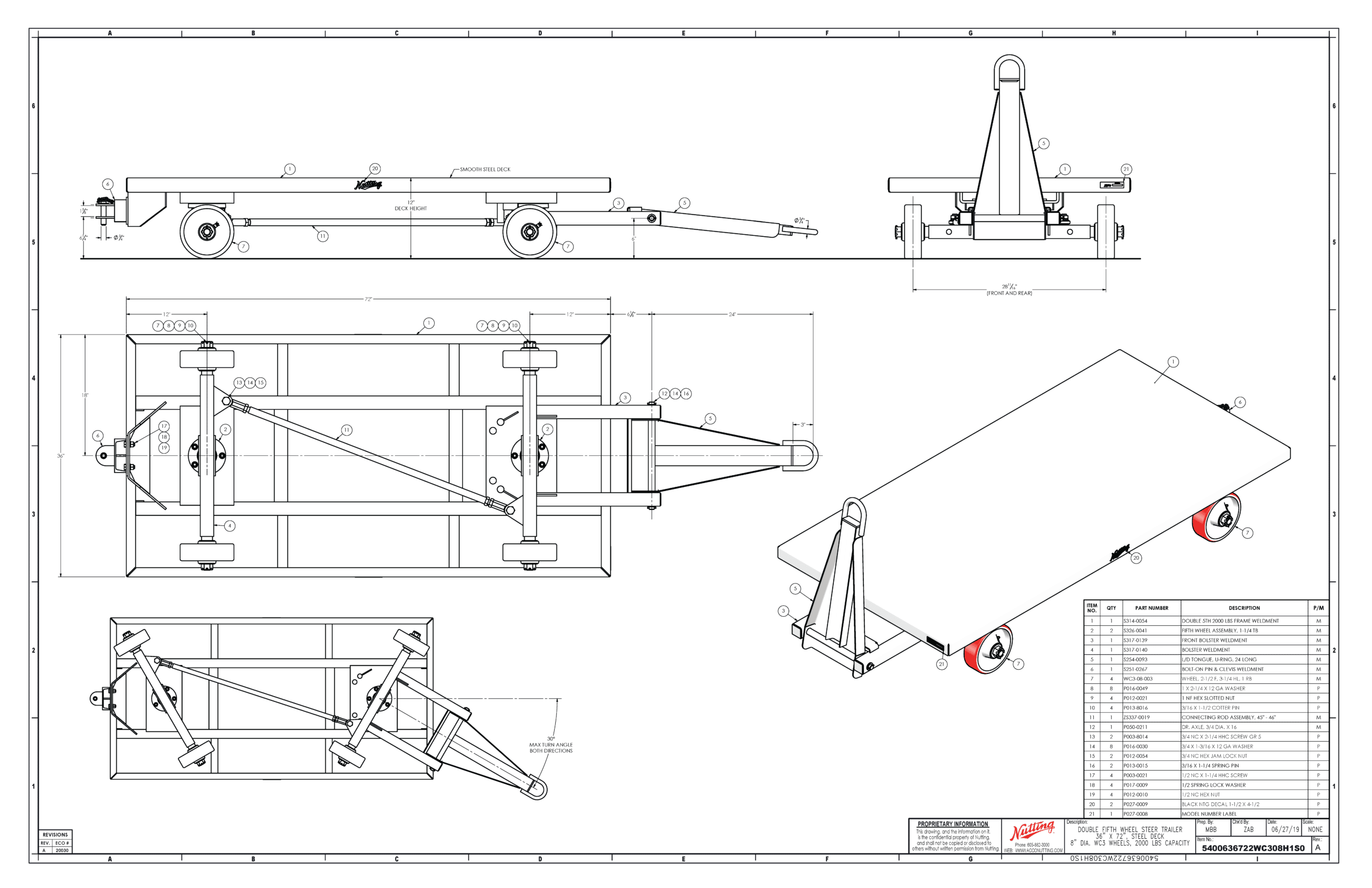
Fifth Wheel Steer Carts

Fifth-wheel steer carts are renowned for their stability and ease of maneuverability. They feature a fifth-wheel steering mechanism that provides excellent control and precision during operation. With the capability to navigate sharp turns and corners with minimal effort, fifth-wheel steer carts are a preferred option for industries that require high levels of agility and control in their material handling processes.

These popular quad steer cart options from Nutting Carts and Trailers offer businesses a range of choices to meet their specific material handling requirements. Whether it’s enhanced maneuverability, organized transportation, or stability during operation, these carts provide efficient solutions for a wide range of industrial settings.

No posts found!

Are Quad Steer Carts Right for You?

Among the many benefits of introducing quad steer carts into your material handling operations, here are just a few to consider:

  1. Improved maneuverability: Quad steer carts can navigate tight spaces and make turns with ease, improving overall material handling efficiency.

  2. Increased control and Stability: Improved control and stability provided by the ability to steer all four wheels reduces the risk of accidents and damage to goods and materials.

  3. Enhanced productivity: Quad steer carts can save time and effort in material handling operations, freeing up resources for other tasks. To learn more about how the right equipment can optimize your workflow in the warehouse, click here.

  4. Cost-effective solution: Quad steer carts are a cost-effective solution for material handling, providing a return on investment through improved efficiency and reduced risk of accidents and damaged goods.

  5. Durability and reliability: The heavy-duty construction and durability of quad steer carts ensure they can perform well even in demanding material handling environments.

  6. Improved safety measures: Decreasing forklift traffic in the warehouse creates a safer working environment, and easy tracking allows tugger operators to focus on what’s ahead, avoiding potential collisions.

Custom Options for You

Quad steer tugger carts, which are often used in industries such as automotive and aerospace, can be modified and designed in a way that best suits the specific needs and requirements of each industry. Whether it’s the type of load that needs to be transported or the unique operational demands of a particular industry, these tugger carts can be customized to ensure optimal performance and efficiency.

  • Automotive: Quad steer tugger carts are used in automotive manufacturing plants to safely and efficiently transport heavy automobile parts within the facility.
  • Aerospace: In the aerospace industry, these carts are customized to handle delicate and sensitive components with precision and care, ensuring the safe transportation of critical parts.
  • Warehousing: Quad steer tugger carts are utilized in warehouses to streamline material handling processes and enable the efficient movement of goods in confined spaces.
  • Manufacturing: Customizing quad steer tugger carts to transport heavy loads and optimize material handling workflows benefits various manufacturing industries.

These carts are versatile and adaptable, making them suitable for a wide range of material handling challenges due to their ability to be tailored to meet specific industry needs.

The level of customization available with quad steer tugger carts not only allows for efficient and safe transportation of goods but also provides a cost-effective solution for businesses looking to optimize their material handling processes. By tailoring these carts to meet specific industry needs, companies can increase productivity, reduce downtime, and improve overall operational efficiency. This flexibility and versatility make quad steer tugger carts a valuable asset for businesses across various industries looking to streamline their material handling operations.

At Nutting, we know just how vital cart systems are to your facility’s overall safety and efficiency across various industries. That’s why we offer various custom options to ensure you have the exact equipment you need for your unique operations. Cart features like:

  • Deck size
  • Load capacity
  • Wheels – Pneumatic for outdoor/rough terrain, poly for smoother surfaces.
  • Hitch design

and more are all easily customizable depending on the planned usage of your quad steer trailers.

Our team of engineering and manufacturing experts has been producing material handling equipment right here in the USA since 1891, so you can be sure you’re receiving only the highest quality products designed to improve efficiency without sacrificing durability. Contact us today to learn more about how our custom cart systems can benefit your material-handling operation.

Nutting can build:


Learn more here!

How Tugger Train Systems Improve Material Handling Operations

Tugger train systems benefit the material handling processes increasing efficiency, reducing labor costs, improving safety, and reducing environmental impact.

Tugger train systems are growing in popularity in manufacturing, distribution, and warehousing industries as a cost-effective and efficient way to transport materials and products in and around your facility. These flexible and modular systems allow for easy customization and adaptation to changing intralogistics demands, making them an ideal solution for companies that require frequent transport of goods. This blog will explore the benefits of tugger train systems and how they can improve productivity and streamline operations in various industries.


What is a Tugger Train System?

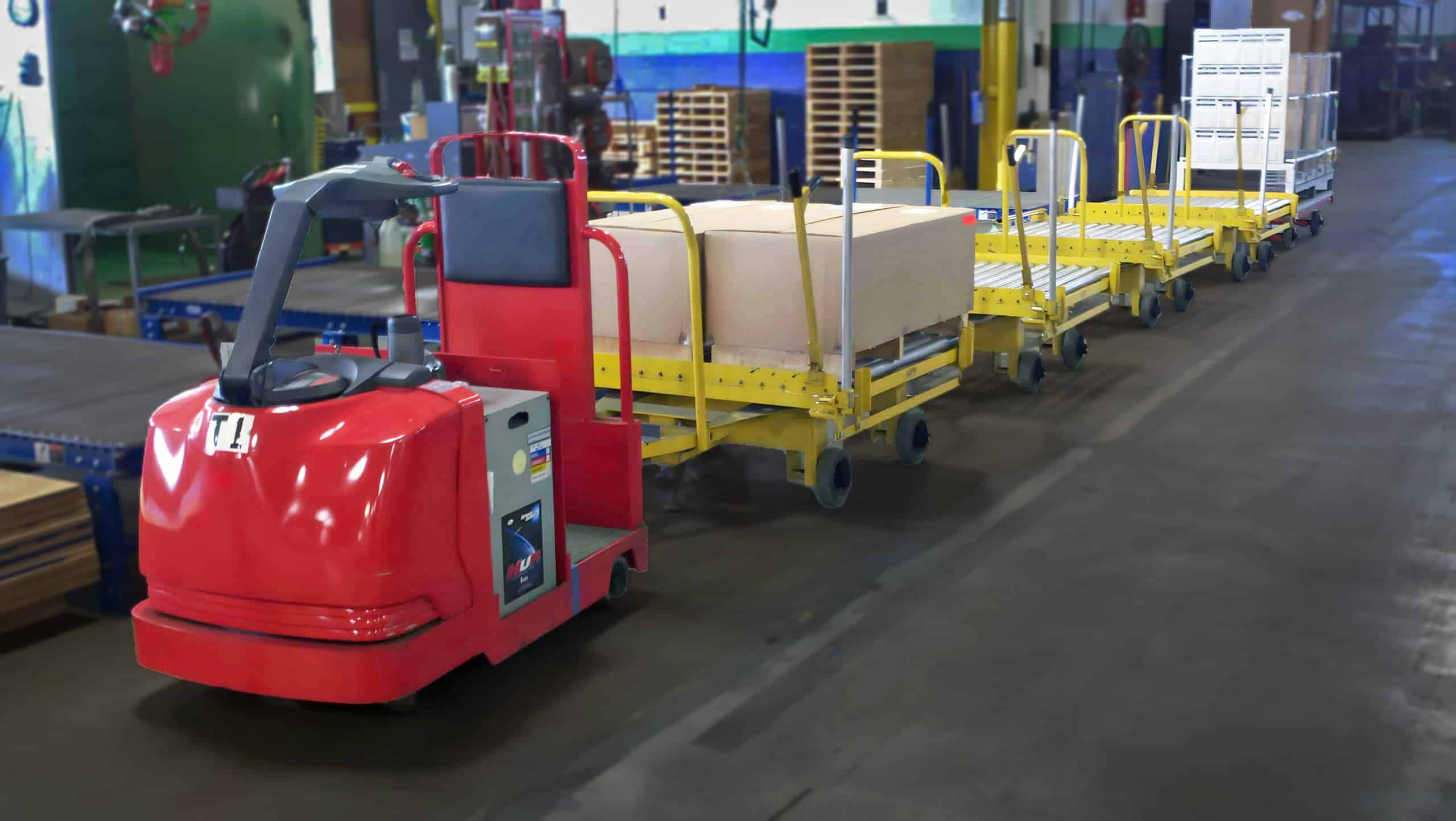
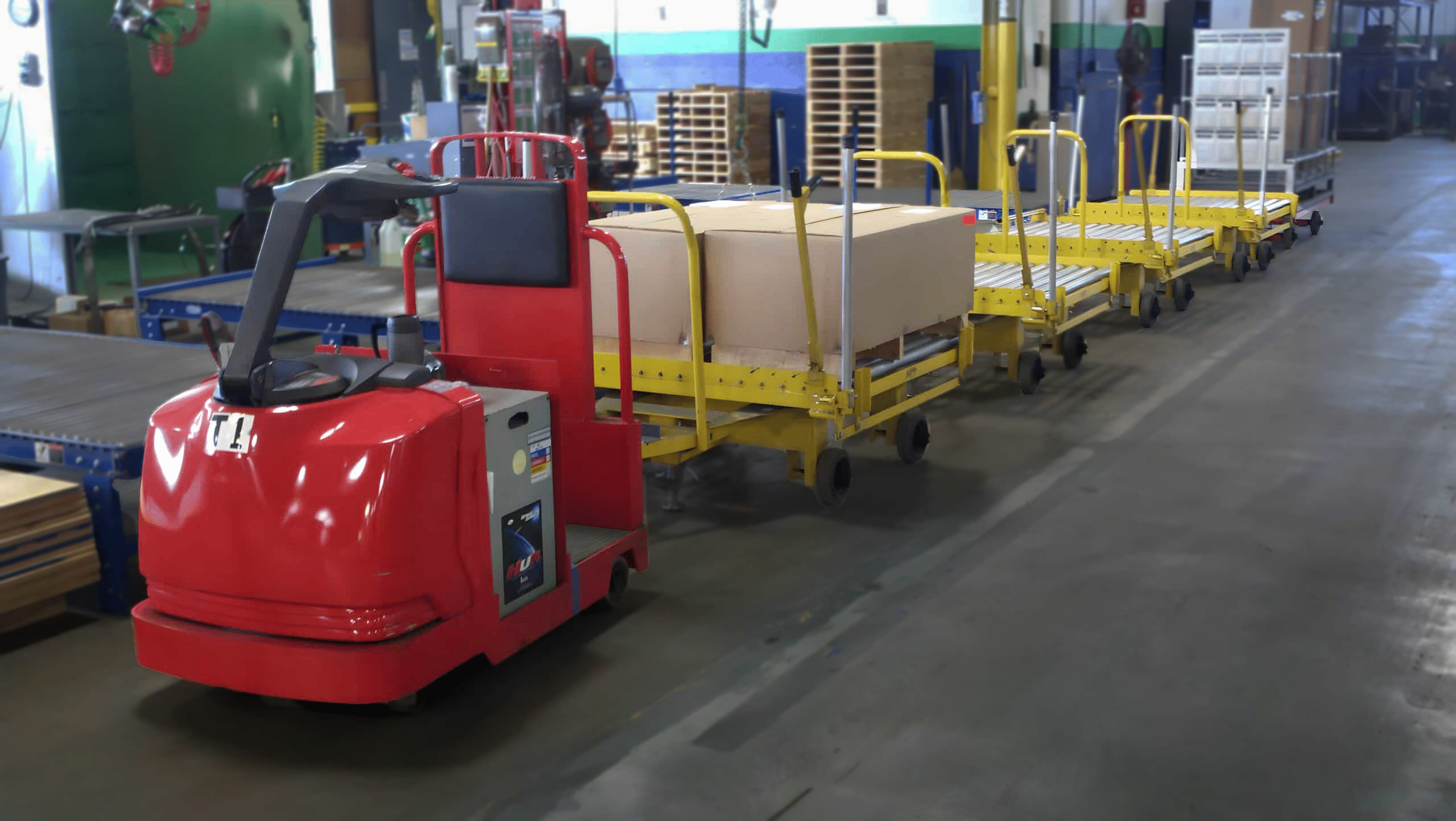
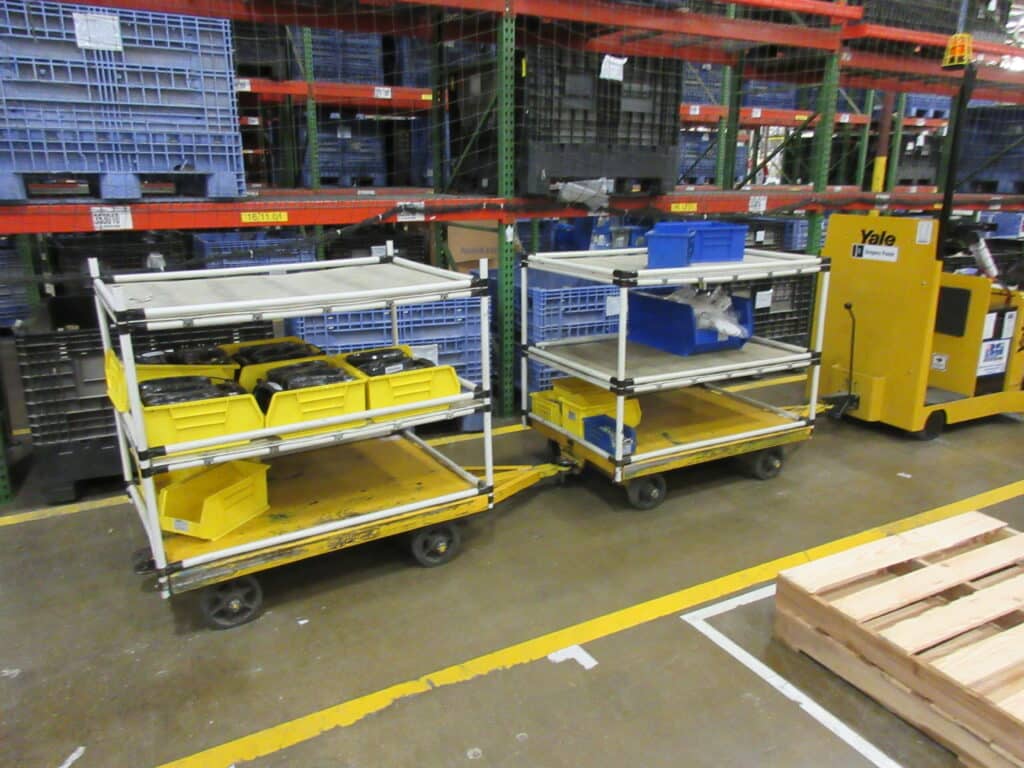
These systems are primarily used for material transport in warehouses and distribution centers. They typically consist of a tugger vehicle (either manually operated or automated) that pulls a train of carts or trailers connected by a tow bar. The tugger follows a pre-determined route, picking up and dropping off carts or trailers often on a “just in time” basis.

Tugger train systems are useful for a variety of tasks, including transporting raw materials, inventory, and finished products to workstations, assembly lines, and more.


How do Tugger Trains Work?

Tugger trains pick up materials and products at designated locations around the facility, load them onto the load carriers or trolleys, and then drop them off at appropriate drop-off points along the tugger train’s designated route. Multiple load carriers allow for the transport of a greater number of loads in one trip around the facility.

Tugger trains are particularly useful in facilities with production lines requiring consistent material supply, but they also apply to many other operations.

Adjustable shelves on Nutting Carts can help provide flexibility to your warehouse operation.

Advantages of Tugger Train Systems

Tugger train systems offer a variety of advantages over traditional material handling methods. With their ability to efficiently move heavy loads, reduce manual labor, and improve material flow, they have become popular with companies looking to streamline their operations and increase productivity. Let’s explore why tugger trains are a smart investment for companies looking to optimize their material handling processes.

Increased Efficiency and Productivity

Tugger train systems can increase productivity and support lean manufacturing production processes by streamlining material handling routes and reducing the time required to move goods between different facility areas.

These systems can further improve efficiency by utilizing the milk run method. Similar to how milkmen would only take trips to replace empty milk bottles left on doorsteps, these systems can identify which tugger train carts returned empty on the last run and load only those materials for the next run. This milk-run system allows for lean logistics and an efficient flow of materials, making it an excellent option for any material supply chain.

Cost-effectiveness

Tugger trains typically have a lower upfront cost compared to traditional forklifts, and they require less maintenance over time, which can result in long-term cost savings. The modular design of tugger trains also allows for easy customization, so companies can add or remove carts and trailers to adapt to the facility’s needs without purchasing additional equipment.

Improved Safety

Forklift trucks used to be the gold standard for the internal transport of materials and products. While they still play a role in production logistics, tugger train systems provide an alternative for many production supply operations, providing a safer means of transport in your facility.

Tugger train systems are designed to be safer than traditional forklifts, as they are often equipped with safety features such as automatic braking, obstacle detection, and audible alarms. They also typically follow dedicated transport routes, decreasing facility traffic and reducing the need for multiple return trips to pick up further supplies.

Ergonomics

Tugger train systems can help reduce the physical strain on workers by eliminating the need for manual lifting and reducing the amount of walking and bending required to move materials. In addition, customized designs like ergonomic handles and effective cart height can further support employee comfort and safety.

Optimized resources

Tugger train systems can help optimize the use of space within a facility by allowing for more efficient storage and more organized systems for retrieving goods and materials.

Overall, tugger train systems offer a range of benefits that can help companies improve their material handling operations and reduce costs while improving workers’ safety and ergonomics.

Tugger Train Application

When you decide to employ a tugger train system in your material handling facility, there are three primary ways you can program your system to best serve your operational needs. One option is the permanent tugger train control, where the next tour begins immediately after the end of a route on a continuous loop.

On the other hand, workload-based control is a type of tugger train system application that only signals the next tour after a specified load is ready for transport or when a maximum amount of time has passed between the previous and current run.

Lastly, the clocked control method involves the departure of tugger trains at scheduled times according to a pre-determined schedule.

Types of tugger carts

When selecting material handling equipment, it’s important to know your options so you can choose the right system based on your unique material transport operation.

Manual Tuggers

These manually operated tuggers are typically used to transport smaller loads over shorter distances. They usually require manual loading and unloading of pallets and manual operation while in transport. These tuggers are a cost-effective solution for basic material handling operations.

Electric Hand Tuggers

Electric hand tuggers are powered by an electric motor, making them more efficient and easier to operate. These tuggers require less physical effort from operators, reducing risk of injury, and can handle moving larger loads over longer distances with ease. They are also more environmentally-friendly than their diesel counterparts and tend to be significantly quieter, which can improve workplace noise pollution.

Automated Tuggers

Automated tuggers or Automated Guided Vehicles (AGVs) are self-guided systems that typically use sensors or lasers to navigate tight routes in the facility. These tuggers can be programmed to follow one specific route or respond to changing conditions in real time.

And with no human operator required, these tuggers can reduce idle time and optimize your employees’ productivity.

Tow Tractors

Tow tractors are particularly effective for operations requiring transport equipment that can handle a heavy load capacity while maintaining better maneuverability and efficiency than a traditional forklift.


Overall, tugger train systems offer many benefits for material handling processes in industrial settings. They can save time, increase efficiency, and reduce labor costs while improving safety and reducing environmental impact.

If you want to learn more about the benefits of tugger train systems for your facility, we encourage you to explore our new electric hand tuggers and consider the potential advantages of upgrading your fleet. Contact our team at Nutting Carts and Trailers today to learn more about our new electric tugger vehicles and how they can benefit your business.