Let’s Unpack and Optimize the Warehouse Putaway Process

We discuss the putaway process in warehousing, its stages, benefits, various strategies for optimization, and its impacts on overall warehouse operations.

Behind every swift delivery and seamless order fulfillment, there lies a carefully executed set of steps that define the crucial putaway process.

A finely tuned putaway strategy is the cornerstone of efficient warehouse operations, serving as the first step towards optimizing productivity, accuracy, and speed in your workflow.

Lets unravel the intricacies of putaway optimization, provide actionable insights, and offer proven techniques to streamline your operations. You’ll learn how to leverage the latest technology, best practices, and strategic planning to transform your putaway process and take your warehouse management to the next level.

Understanding the Putaway Process in Warehousing

The putaway process in a warehouse refers to the set of actions taken to store incoming goods in the warehouse after receiving them. This is an essential stage in the warehouse operation because the efficiency and accuracy of the putaway process can significantly impact the overall productivity and effectiveness of a warehouse.

Here are the general steps involved in the putaway process:

Receiving: The putaway process begins when goods are received at the warehouse dock. This involves checking the received goods against the purchase order to ensure that the right items have been delivered in the correct quantities.

Inspection: After receiving, the goods may go through quality checks which are crucial to ensure that valuable storage availability isn’t being used for faulty products.

Recording: The received goods are then entered into the warehouse management system (WMS). This step is critical to maintaining accurate inventory records.

Sorting: Depending on the size and complexity of the warehouse operation, the goods may be sorted before putaway. Sorting can be done based on several criteria such as item type, destination zone, or storage requirements.

Storing: Finally, the goods are transported to their designated location in the warehouse and stored. The WMS is updated to reflect the new location of the goods.

The Integral Role of Putaway in Warehouse Operations

The putaway process is integral to warehouse operations for several reasons:

Benefits Subsequent Processes: It can impact the efficiency of subsequent warehouse processes like picking and packing. For instance, strategic putaway can minimize travel time for warehouse employees during picking.

Supports Inventory Management: Accurate putaway helps maintain inventory accuracy, which is vital for order fulfillment and avoiding stock-outs or overstocking.

Improves Organization: It can impact the utilization of warehouse space. Effective putaway strategies aim to maximize the use of available space and maintain an organized distribution center.

Lowers Costs: The putaway process can influence labor costs. The more efficient the process, the lower the time and labor required.

Given its significance, many warehouses are increasingly looking to optimize their putaway processes. This can involve various strategies such as implementing advanced WMS software, using automated equipment, and adopting techniques such as cross-docking and drop-shipping. 

Savings with the Warehouse Putaway Process

Different Types of Putaway Strategies for Optimal Efficiency

There are several types of putaway systems or processes that warehouse managers can use to optimize their operations. The choice of strategy often depends on the specific needs of the warehouse, including the type of goods stored, the warehouse’s size, and its technological capabilities. Here are some commonly used putaway strategies:

Random Putaway: In random putaway, goods are placed in any available location in the warehouse. While this method can be efficient in terms of storage space utilization, it may require a robust Warehouse Management System (WMS) to keep track of where everything is located.

Fixed Location Putaway: This method involves assigning specific locations in the warehouse for specific goods. It makes locating items easier and may be best for high-volume items or goods with special storage requirements. However, it can result in inefficient space usage if not managed properly.

Zone Putaway: In this strategy, the warehouse is divided into zones, and items are assigned to these zones based on certain characteristics, such as product type, size, or storage requirements. This method can make picking processes more efficient and organized.

Direct Putaway: Directed putaway relies on a WMS to determine the optimal location for each SKU. The system considers factors such as available space, proximity to picking locations, and item characteristics to assign storage locations. This method can greatly increase efficiency and space utilization. In order to implement this strategy, your WMS must be able to assign a product’s final location from an advanced shipment notice or from the receiving dock.

FIFO (First-In-First-Out) Putaway: Ideal for perishable goods or items with expiration dates, this strategy ensures that the oldest items (first in) are sold or used before newer ones (first out).

LIFO (Last-In-First-Out) Putaway: This strategy is the opposite of FIFO and is suitable for non-perishable goods. The most recently received items (last in) are the first ones to be sold or used (first out).

Volume-Based Putaway: High-volume items are stored in locations that are easy to access, while low-volume items are stored in less accessible locations. This strategy is aimed at reducing picking time.

Dynamic Putaway: Dynamic putaway utilizes dynamic locations or temporary locations to store inbound inventory based on real-time inventory levels and changes in demand.

Each of these strategies has its advantages and potential drawbacks, and many warehouses use a combination of strategies to meet their specific needs. Equipment such as custom quad-steer carts can also play an integral role in facilitating the putaway and order picking processes, especially in warehouses with narrow aisles and tight turns. 
 

Steps to Achieving an Organized and Efficient Warehouse

An efficient putaway method is the cornerstone of a well-organized warehouse. While understanding the putaway process is the first step, implementing changes that lead to its enhancement is the real challenge. Here are some practical steps that you can take to optimize your overall warehouse operations.

Train Warehouse Workers: Workers should be well-versed in the putaway process and the specific methods your warehouse employs. Regular training programs can ensure that employees are up-to-date on best practices and understand the impact of their work on overall warehouse efficiency.

Leverage Technology: Utilizing technology like Warehouse Management Software (WMS) and barcoding systems can streamline your putaway process, reduce human errors, and enhance inventory tracking.

Optimize Warehouse Layout: Your warehouse layout plays a significant role in the efficiency of your putaway process. Make sure to organize your storage locations and slots based on product type, frequency of orders, and compatibility with other items.

Regularly Review and Update Putaway Processes: Warehouse operations and market demands evolve over time, and so should your putaway process. Regular reviews can help identify inefficiencies and areas for improvement.

Understanding and improving the putaway process can significantly enhance your warehouse’s order fulfillment and space utilization.

One method that could enhance your order fulfillment further is milk run logistics. This approach, where a single transport vehicle collects and delivers goods in a route with several stops, can significantly optimize your warehouse storage and retrieval process.


The Power of an Optimized Putaway Process

The putaway process, often overlooked, is a linchpin in the operations of an effective warehouse. Its efficiency directly impacts the smooth flow of goods, from the receiving area to the designated storage locations. It also impacts other warehouse processes, including picking and order fulfillment, making it an integral part of the warehouse’s operational health

Optimized putaway operations also eliminate unnecessary handling and movements, cutting down the time required to store and retrieve items. It allows your warehouse to process a higher volume of inbound and outbound goods and can enhance your warehouse’s response to variations in order volume and shipping frequency.

In the fast-paced world of distribution and logistics, a meticulously planned and executed putaway process can make all the difference. However, the efficacy of your putaway process doesn’t stop at strategy and planning – it extends to the tools and equipment your workers use daily.

One such tool that can greatly enhance your putaway process is an electric tugger system. With the right equipment, you can minimize physical strain on your workers, improve safety, and optimize the movement of goods within your warehouse. To see what it would take to get a tugger system set up in your facility, read more about our MasterMover Electric Hand Tuggers here.

Ultimately, the power of an optimized putaway process is its impact on the broader objectives of your warehouse: to facilitate the seamless flow of goods, meet customer demands, and maintain a high level of operational efficiency. The putaway process is not just a warehouse operation but a strategic element of your business that, when managed correctly, can bring significant improvements to your bottom line.

 

How Inventory Classification Elevates Warehouse Efficiency

Inventory classification, using the ABC classification method to prioritize high-value items, improves supply chain management even during market fluctuations.

As the lifeblood of any robust warehouse management system, inventory classification plays a vital role in streamlining operations and optimizing profitability. This systematic approach to categorizing inventory lays the groundwork for more effective supply chain management and can transform the way your warehouse operates.

Inventory classification is about more than simple organization. It’s about discerning the intricate dynamics between different types of inventory and how they impact overall warehouse performance. It’s about distinguishing high-value, high-volume items from those of lower value or slower turnover, ensuring that your focus and resources are invested in the right areas.

By adopting a strategic approach to inventory classification, you unlock a multitude of benefits that create ripples throughout your organization. It paves the way to heightened efficiency, lower operational costs, and improved service levels while arming you with the tools to respond to fluctuations in demand and prevent costly stockouts.

Ready to discover how inventory classification can revolutionize your warehouse operations? Keep reading to uncover valuable insights into this powerful inventory management tool. The journey to a more efficient, profitable warehouse starts here.

Understanding the ABC Inventory Classification Method

Inventory classification is a tool of strategic relevance for warehouse management, and the ABC classification method serves as its cornerstone. This methodology is derived from the Pareto principle, or the 80/20 rule, which stipulates that 80% of effects come from 20% of the causes. In the context of inventory, this translates into a small proportion of the total inventory items or SKUs (stock keeping units), often contributing significantly to the overall business value.

The ABC classification segregates inventory into three categories:

  • Category A items: These are the high-value items that contribute significantly to the overall profitability but constitute a smaller portion of the total inventory volume.

  • Category B items: These are the moderate value items, which strike a balance between the A and C categories.

  • Category C items: These are low-value items with high volume, which, although plentiful, contribute less to the overall profitability.

By prioritizing ‘A items’, warehouse managers can focus their resources on the inventory that provides the greatest return. Effectively managing these high-value items can significantly enhance warehouse efficiency and profitability. Effective classification can also mitigate a range of operational issues. For example, by identifying and focusing on ‘A items’, warehouse managers can reduce the risk of stockouts and decrease lead times. Having an appropriate safety stock level also becomes easier when you know which items need more immediate attention and which ones can afford to wait.

A well-executed ABC classification system can also lead to more efficient warehouse order picking systems. This is because a warehouse designed with ABC classification in mind can group ‘A items’ together for quick and easy access, increasing picking speed and reducing labor costs. To understand the dynamics between inventory classification and order picking systems better, consider reading our article on effective order picking systems, which offers insights on how effective picking begins with effective inventory management.

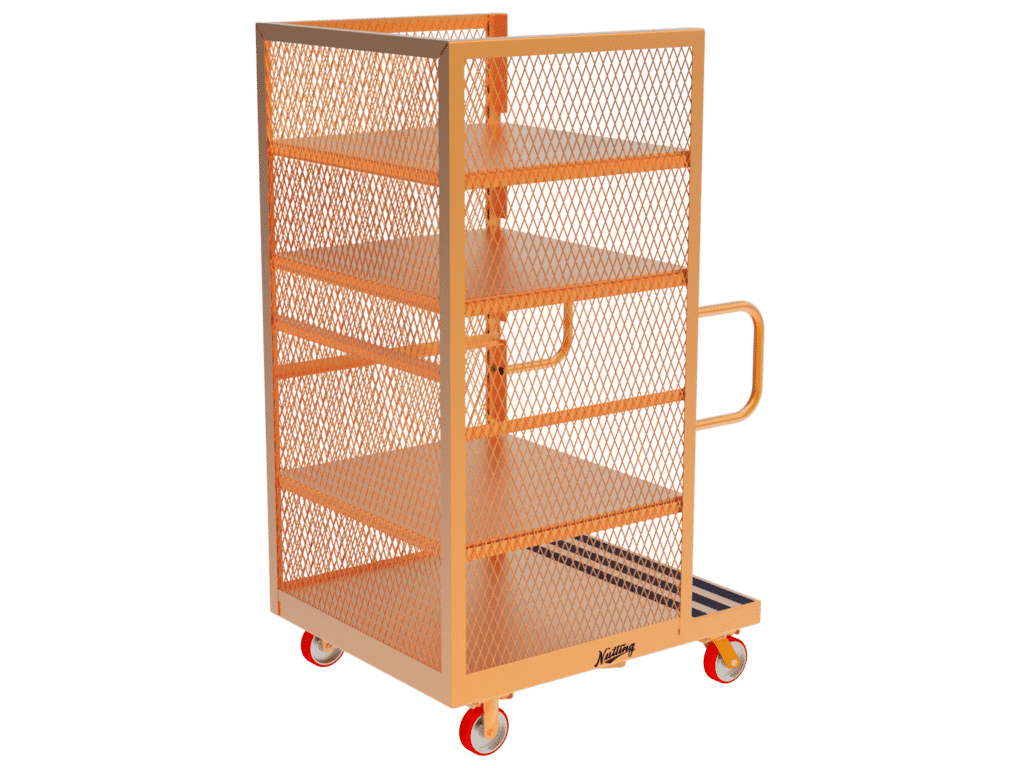
Order Picker Carts with Adjustable Shelves by Nutting Carts and Trailers
Custom Order Picker Carts Can Help Optimize ABC Classification

Inventory Control Optimization with ABC Classification

At its core, ABC classification is a decision-making tool. By delineating inventory items into ‘A’, ‘B’, and ‘C’ categories that represent inventory value, it facilitates prioritization and optimizes the management of high-value items. This significantly enhances service levels by ensuring that the most critical items are always available and delivered on time. This outcome manifests as increased customer satisfaction and improved business reputation, both of which are essential to long-term success.

The categorization intrinsic to ABC classification reduces inventory cost by pinpointing which items contribute the most to your business value. This strategy can drastically decrease holding and ordering costs, which in turn improves cash flow and profitability.

Effective classification of inventory also strengthens supply chain management. With the insight provided by the ABC system, businesses can better negotiate with suppliers, schedule production, and plan deliveries, all of which bolster supply chain efficiency. The interplay between inventory classification and material handling equipment, like mother-daughter carts, can also significantly increase warehouse efficiency. These carts, for instance, can be configured to carry ‘A’ items more frequently, making them an essential component of a well-optimized inventory system.

Navigating the Challenges of Inventory Classification

Despite its numerous advantages, implementing an inventory classification system is not without its challenges. Maintaining accurate inventory levels is essential, but it can be complicated by fluctuating customer demand, seasonality, and market trends. Misjudging these factors can lead to excess inventory or, worse, stockouts.

Cycle counting, or regularly scheduled audits of inventory items, helps maintain the accuracy of your classification. It ensures that ‘A’ items remain ‘A’ items and that shifts in demand are promptly identified and acted upon.

In the same vein, modern inventory management systems equipped with AI and machine learning algorithms can predict demand fluctuations and suggest optimal reordering points, ensuring a consistent service level.

Planners play a pivotal role in helping to review and update the classification system, adapting it to the dynamic nature of inventory. Their informed decisions ensure that even as customer demand varies, your warehouse stays efficient, and stockouts are prevented.

Ultimately, successful inventory classification is an ongoing process. It requires continuous adjustments and refinements in response to changing business needs and market conditions. By acknowledging the challenges and leveraging the right tools, strategies, and personnel, businesses can harness the full potential of inventory classification to elevate their warehouse efficiency.

Inventory Classification Impacts Your Bottom Line

Effective inventory classification not only helps to identify your most profitable SKUs, but it also helps identify potential warehouse bottlenecks and areas for improvement. For example, if ‘A’ items are frequently out of stock or hard to reach, it may indicate a need for adjustments in warehouse layout or even the introduction of new material handling systems like tugger train systems. These systems can improve the movement of materials within the warehouse, particularly high-value ‘A’ items, resulting in more efficient operations.

Inventory Classification: Your Key to Warehouse Efficiency

Inventory classification is not just a procedure; it is an indispensable strategy for effective inventory management. This systematic approach of classifying SKUs into ‘A’, ‘B’, and ‘C’ categories is vital for optimizing warehouse operations, enhancing service levels, and ultimately driving profitability.

Inventory classification allows businesses to focus their resources where it matters most, reducing unnecessary expenditure on low-value items, and ensuring that the most profitable inventory is readily available.

Inventory classification’s influence also extends beyond the warehouse, positively impacting the entire supply chain. By understanding your inventory’s dynamics, you can forecast demand more accurately, manage supplier relationships better, and optimize production schedules, leading to a more robust and efficient supply chain.

If your facility is ready to level up its efficiency, Nutting Carts & Trailers’ rapid-ship catalog features an array of our most popular carts and trailers. With a shipping time of just 30 days, these solutions are the key to taking your warehouse operations to the next level. Start your journey towards a more efficient and profitable warehouse today.

Revolutionize Your Warehouse with Dynamic Storage Systems

Dynamic storage systems revolutionize warehouses by providing scalability through flexible configurations that optimize storage density and workflow.

As warehouses strive to manage an increasingly diverse and demanding range of stock, it’s clear that traditional static storage systems can no longer keep pace. The shift towards more dynamic, adaptable storage solutions promises to streamline operations and completely change how we think about space utilization, warehouse efficiency, and inventory management.

Dynamic storage is a strategic approach to inventory management that reshapes the warehouse environment to promote agility, scalability, and responsiveness. It is an evolution in storage systems that champions flexibility, making it a fitting response to the challenges and complexities of today’s warehousing landscape.

Keep reading to discover the potential of this innovative storage approach and how it can help your business adapt to the changing warehousing landscape while meeting the high demands of material handling in the modern era.

The Case for Modernizing Your Storage Approach

Modern warehouses face a wide variety of challenges. From fluctuations in demand and supply chain disruptions to inventory management and space optimization, today’s warehousing operations require complex orchestration. Material handling is at the heart of these operations, and its efficiency can directly influence the success of the warehouse as a whole.

Traditional static storage systems often struggle to keep pace with the rapid changes and high demands of modern warehousing, hindering pallet flow and limiting the ability to adapt swiftly to varying stock levels and product turnover rates.

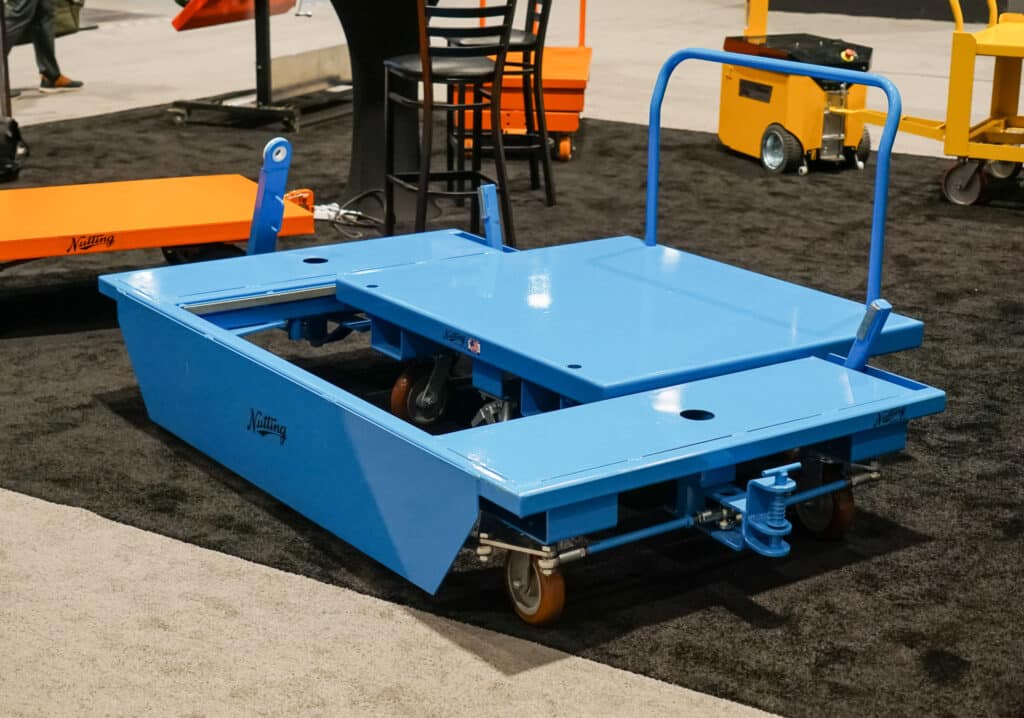
Dynamic storage systems, on the other hand, offer a versatile solution for all types of racking systems. Their flexible design can handle the uncertainties of warehousing, enabling quick adjustments to changes in inventory volume, composition, and movement patterns. An example of custom built equipment that improves dynamic storage is the use of mother-daughter carts. These cart systems combine storage and maneuverability, allowing for more efficient transport of goods within the warehouse.
Mother Daughter Cart by Nutting

Advantages of a Dynamic Storage System

Dynamic storage systems offer a superior approach to handling the demands of modern warehousing. They integrate seamlessly with advanced warehouse management systems, making them a worthy investment for any forward-thinking business looking to optimize its warehousing operations.

Better Space Utilization

Dynamic storage systems offer improved space utilization compared to static systems by reducing aisle widths and allowing for flexible reconfiguration, which can free up valuable floor space.

Increased Storage Density

By maximizing the storage capacity per square foot, dynamic systems help warehouses handle more extensive inventories within the same footprint. This aspect becomes particularly crucial in CSI (Continuous Stock Improvement) processes, where storage density plays a crucial role.

Enhance Workflow Efficiency

The flexibility of these systems allows for better organization and faster retrieval of goods. Their design enables faster provisioning and improves runtime efficiency, contributing to increased throughput overall.


How Custom Carts Power Your Dynamic Storage

Custom carts and trailers add another layer of flexibility, allowing you to customize your storage solutions to perfectly suit the unique needs of your warehouse.

Custom carts can effectively address the challenges associated with carton flow and contribute to the efficient optimization of warehouse operations. By accommodating different types of inventory directly on a cart or trailer, they facilitate faster and more flexible movement of goods. For example, using carts for pallet storage could eliminate the need to have staff stack, unstack, and restack pallets every time they need to be moved. Depending on the demand or space availability, these carts or trailers can be swiftly relocated to new warehouse storage areas.

This system optimizes your storage solutions and simplifies your warehouse inventory management. Real-time metrics provide actionable data, contributing to a more efficient pricing strategy. By combining dynamic storage with custom cart and trailer solutions, warehouses can unlock unprecedented levels of operational efficiency.

Navigating Your Transition to Dynamic Storage

The transition to dynamic storage systems is a transformative process that involves careful planning and execution. It’s not a matter of just choosing the right type of storage but also effectively managing the associated workloads.

Start with a thorough evaluation of your warehouse layout. Dynamic storage systems may require adjustments to your current setup to unlock their full potential. This evaluation will help identify the most appropriate storage class for different types of inventory based on their turnover rate, accessibility requirements, and more.

It’s also essential to manage your workloads efficiently during this transition. The shift to dynamic storage could impact various operational aspects, including order-picking processes and warehouse traffic patterns. These changes should be managed to minimize disruption and ensure a smooth transition.

Consider establishing a plan for phased implementation and thorough staff training as part of the transition. A phased approach allows you to gradually switch to the new system, making necessary adjustments along the way. It also provides time for staff training, ensuring everyone is comfortable with the new system before it’s fully operational.

Remember, transitioning to a dynamic storage system is not an end in itself but a means to a more efficient, flexible, and optimized warehouse operation. When properly managed, it’s a journey that can position your warehouse for future growth and success.

Your Partner for a Dynamic Storage Solution

When it comes to dynamic storage solutions, Nutting has been leading the way with our innovative custom cart and trailer offerings. Our solutions are designed to facilitate the transition to a dynamic storage system, easing the operational challenges that come with it.

Our custom carts and trailers are designed to help you manage and optimize your warehouse operations effectively. Our solutions can be integrated with your current systems and processes with seamless initialization, minimizing any disruption to your operating systems.

We encourage you to contact us and leverage our expertise to solve your complex storage needs. Allow us to show you how custom carts and trailers can elevate your warehouse operations and prepare your business for the future. At Nutting, we are not just solution providers; we are partners invested in your success. Future-proof your warehouse with us and set your business on the path to sustained growth and efficiency.