The Best Material Handling Equipment For Your Warehouse Space

Learn the factors to consider when choosing the best material handling equipment to fit your warehouse layout and needs, from hand trucks to mobile robots.

Undoubtedly, e-commerce has exploded recently, leaving the supply chain struggling to keep up with the increased demand. As a result, warehousing and distribution centers have become more important than ever as vast amounts of goods are stored, inventoried, packed, and shipped worldwide.

However, not every warehouse is a shipping hub, and many materials require specialized care leaving no one-size-fits-all solution for bulk material handling equipment. This article explores solutions for different Warehouse Management Systems (WMS) to ensure proper material handling.


Inventory Management and Storage

Before a decision can be made on the optimization of warehouse storage equipment, some factors must be considered:


Warehouse Layout and Business Needs

The space utilization of a warehouse is crucial to determining the material handling equipment. Confined warehouse space with narrow aisles and limited floor space will favor maneuverability. A facility moving materials from large silos through hoppers, conveyor belts, or even grain elevators would require heavier-duty equipment. An order fulfillment facility may only be able to meet demand using automatic guided vehicles.


Your Unit Load

A load you can store or move as a single entity is called a unit load. This can include a container, tote, or pallet. Knowing the size, shape, and weight of a typical unit load is critical in determining the types of material handling equipment required.


Types of Material Handling Equipment

Hand-Operated

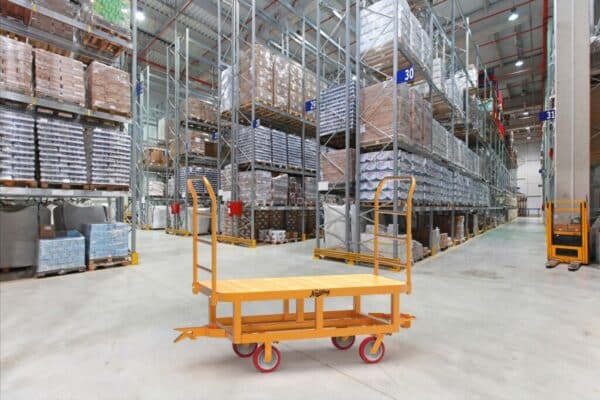
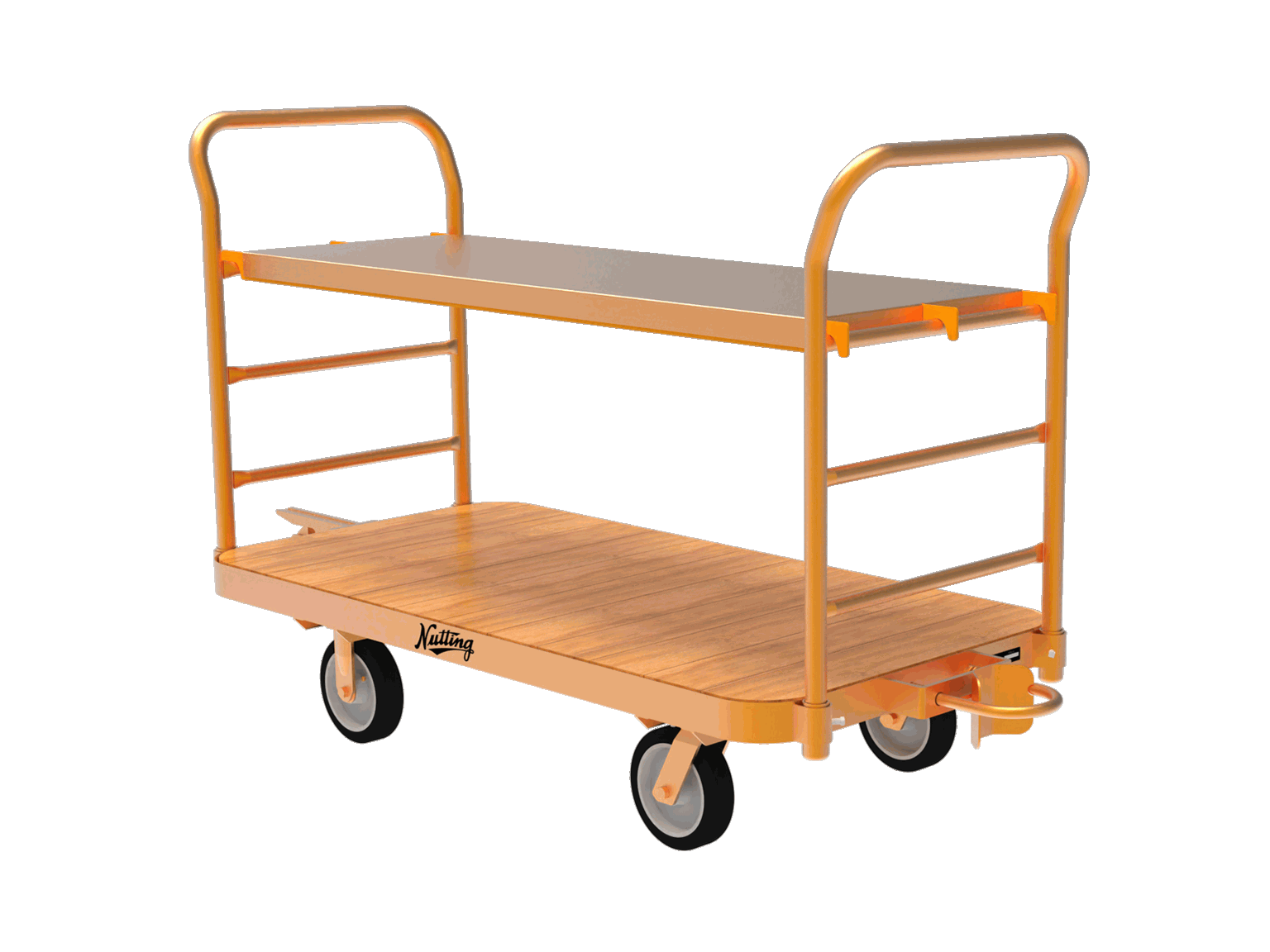
Hand-operated carts, like hand trucks, dollies, pallet jacks, and A-Frame carts, offer increased mobility in tight spaces, more accessible transportation of goods, and reduced manual labor. All of which leads to increased efficiency. Most hand-operated material handlers are designed to be easily maneuvered by just one person, reducing the amount of manual labor required.

Hand Trucks are perfect for various applications, including order picking, workstation and assembly cell replenishment, lean manufacturing, and other material handling requirements. Most modern hand trucks are built with ergonomics and safety in mind. When maneuvering the cart correctly, the warehouse staff can safely transport materials and stay free from injury.

Pallet Jacks or pallet trucks are cousins of dollies, hand trucks, and forklifts, designed with parallel forks so a single person can move pallets. They can feature a manual pump system similar to a car jack to lift the pallets, or they can have an electric lift system.

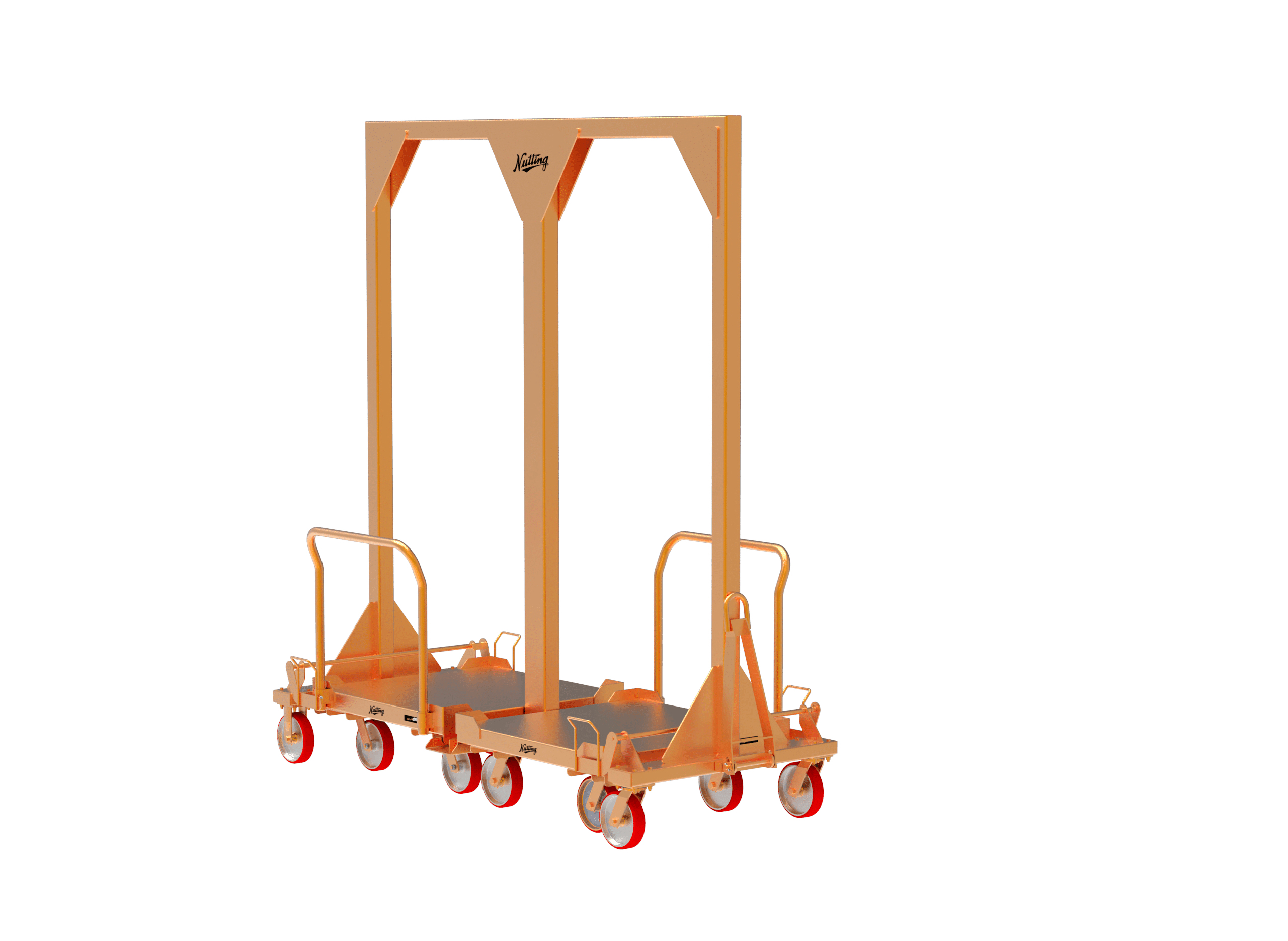
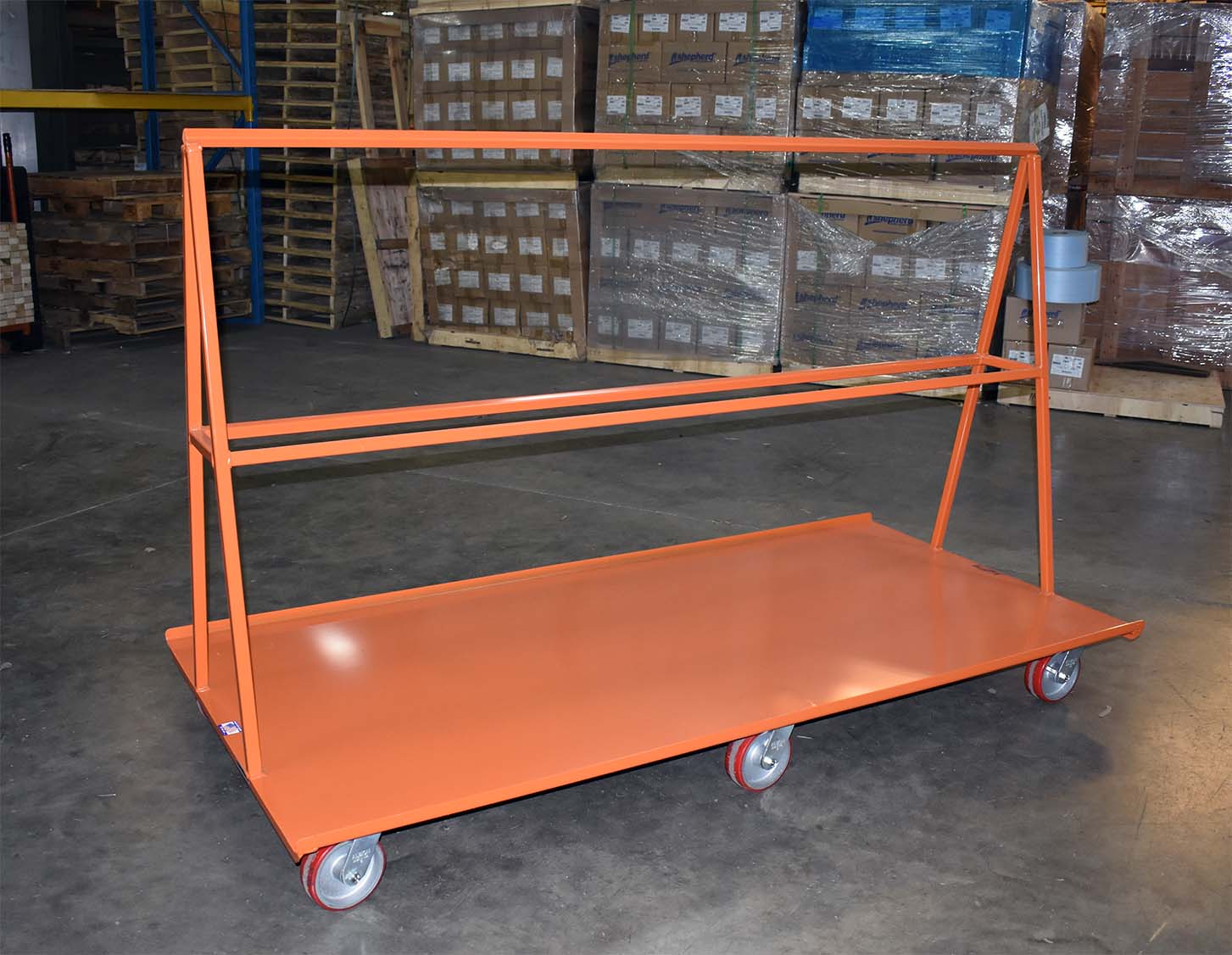
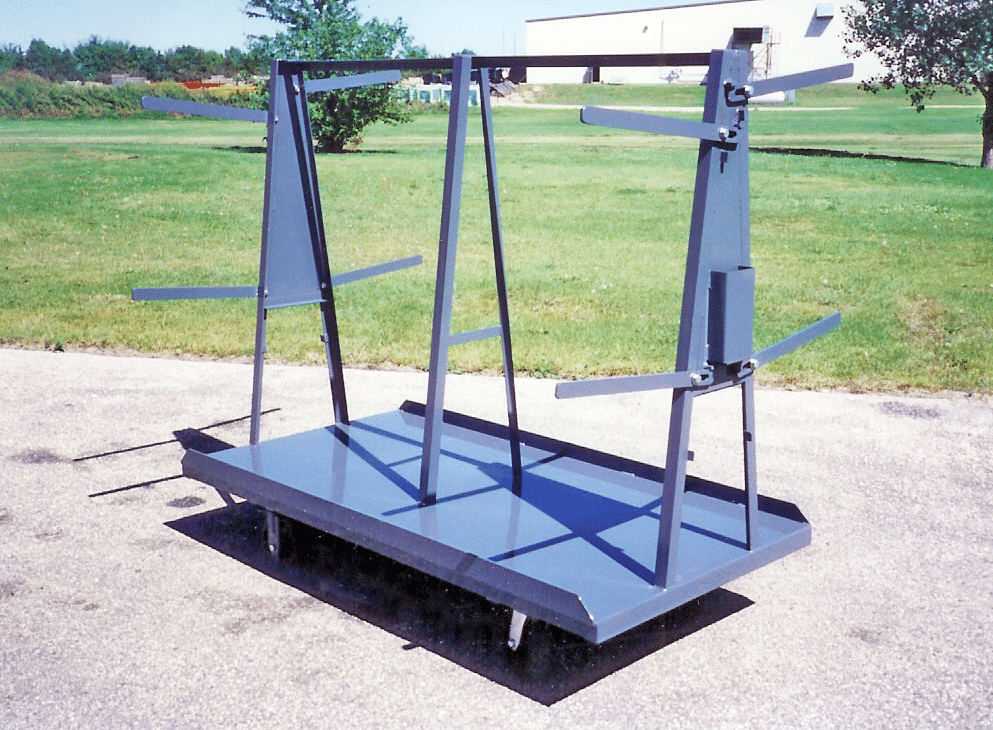
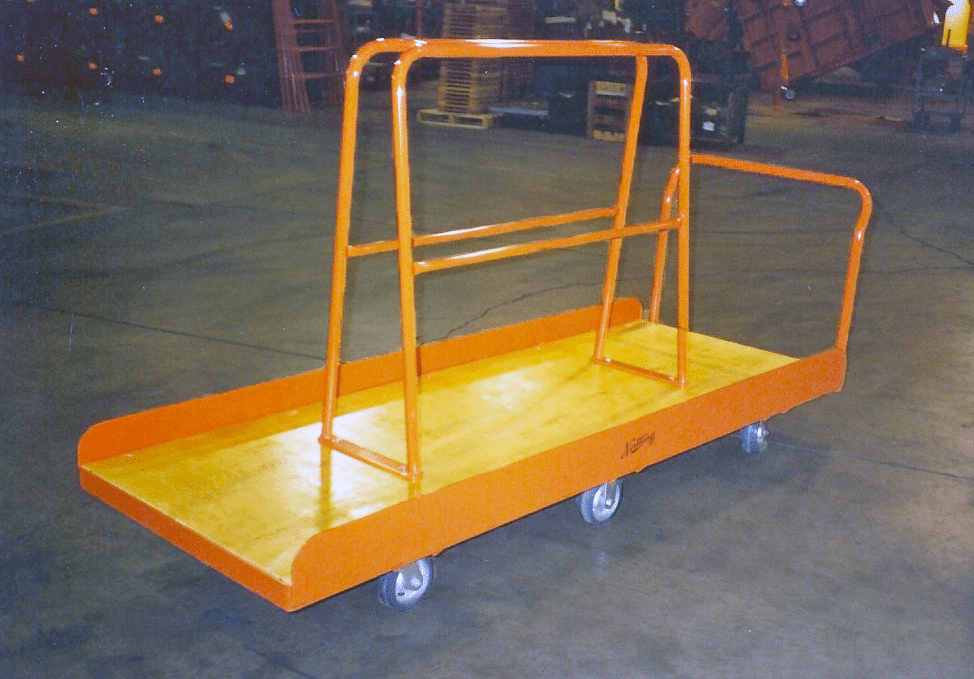
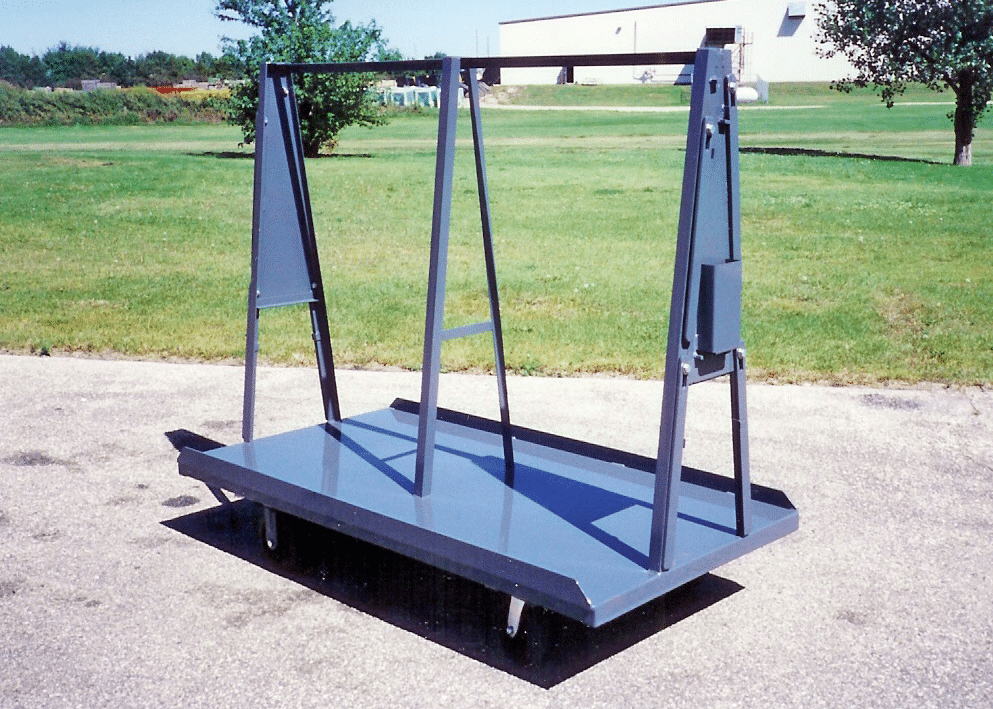
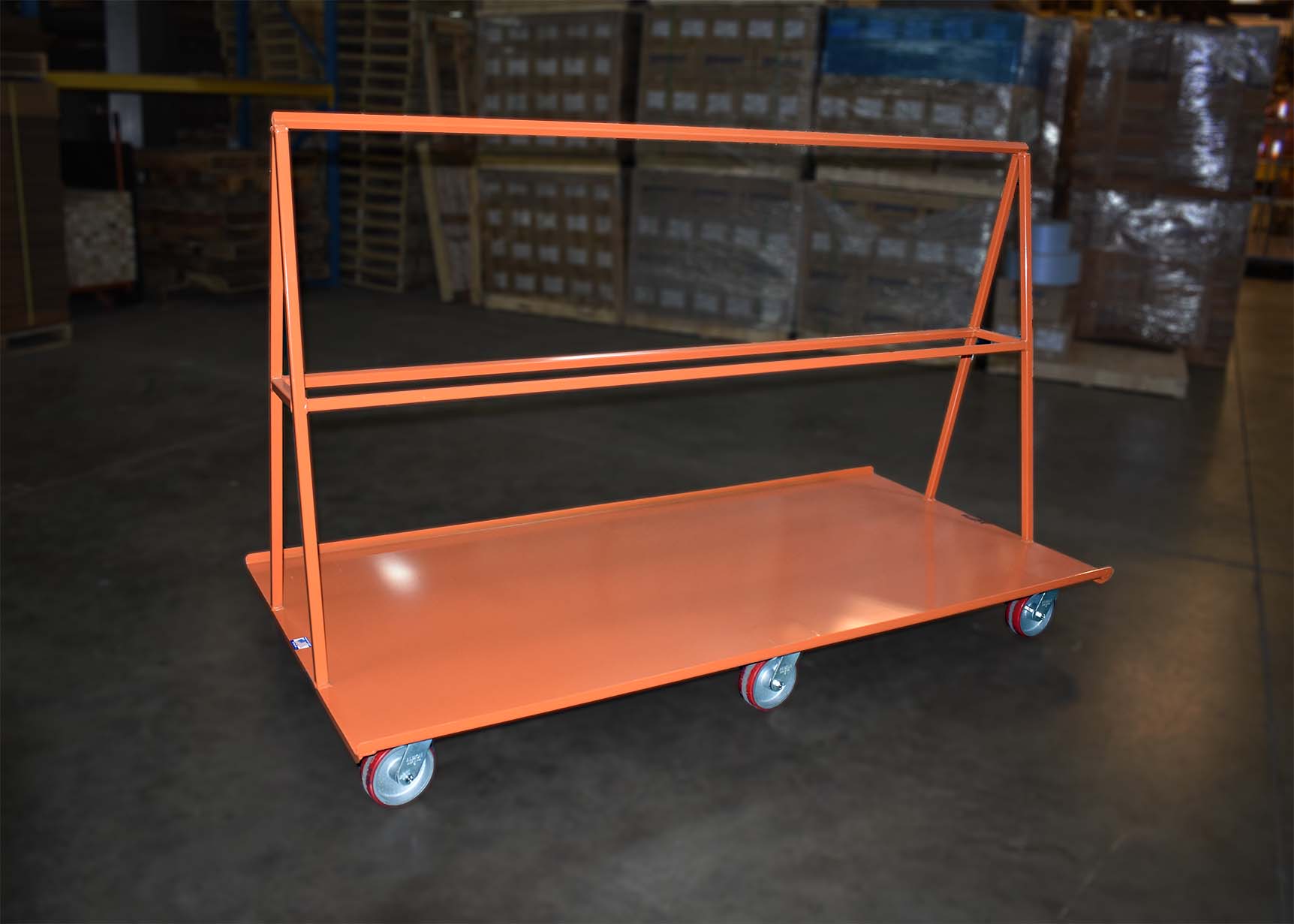
A-Frame Carts are designed to move large quantities of long, flat materials such as glass windows, door frames, partitions, and sheet stock and can be loaded from either side, offering versatility. In addition, they can carry heavier loads than a conventional hand truck or dolly, making them ideal for moving large, heavy objects such as metal security doors or sheets of plywood. 


Machine Operated

This category will include all industrial trucks, such as forklifts and side loaders. While these machines require more space to maneuver, they can handle larger, heavier loads than a hand-operated cart.

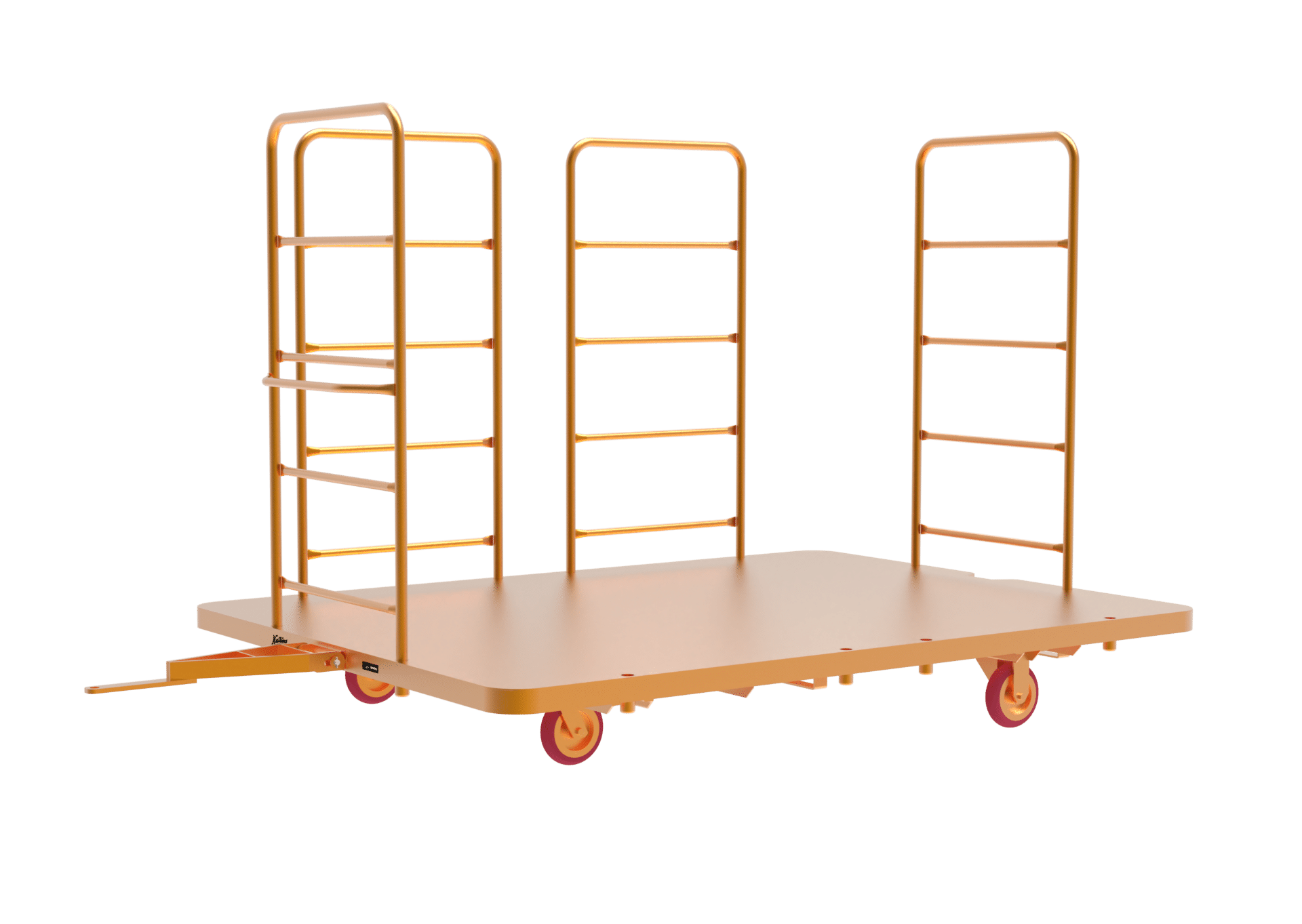
Forklifts or lift trucks are a valuable staple of many warehouse settings. While they are primarily designed to load pallet racks, you can further increase the utility of forklifts by adding attachable trailers that can also be loaded with materials. This turns the forklift into a train engine of sorts.

Side Loaders are a type of forklift designed to pick up longer items or fit narrow aisles. As their name suggests, they can be loaded from several different directions as opposed to a standard forklift that must load directly in front.

Order Pickers are another type of lifting device, but in this case, they raise a platform to the various levels of a pallet rack so that a human order picker can load the platform with the needed materials.


Automated Material Handling Systems

Automated storage and retrieval systems are engineered systems that include Automated Guided Vehicles (AGVs) or Autonomous Mobile Robots (AMRs) working with conveyor systems. Although robotic delivery systems speed up the material handling process, automated equipment often has special requirements for the system to function correctly. While ideal for high-volume order fulfillment distribution centers, they require custom storage racks and a computer management system. In addition, AGVs need flooring that meets specific flatness, levelness, and curvature standards.


Choosing Warehouse Material Handling Equipment to Optimize Each Unit Load

Nutting Carts and Trailers takes the time to understand your specific warehouse operation to engineer and manufacture a product that meets those needs. Nutting has you covered whether you need a custom industrial cart or trailer with particular features or want a standard model with a few modifications. All our products are made in the USA using high-quality materials and components, backed by a comprehensive warranty, ensuring that you can count on them to perform reliably for years to come.


How to Determine Your Forklift’s Load Capacity

Before you start your search for the right forklift attachments or accessories, it’s important that you understand some of the finer specifications of your machinery. Knowing how to determine your forklift capacity isn’t as simple as looking at the data plate, also known as the capacity plate, on your forklift. You need to know and understand the load dimensions, placement, and distribution. 

How to Calculate Load Capacity

The lifting capacity of your forklift – sometimes also called load, net, or rated capacity – is a measure of the weight that the forklift can raise safely at a given load center. The rated capacity of your forklift is located on the data plate for your lift and can range from 3000 pounds to over 70000. It’s important to note that the forklift’s rated capacity is not always the same as maximum capacity – there are other considerations to bear in mind when figuring out if your machine can handle a given load’s weight.

Forklift capacity is closely related to the load center, which is the horizontal distance from the fork’s vertical face to the center of gravity for the load (your forklift data plate may feature a capacity chart that takes this into consideration).

You can calculate your lift truck’s capacity (and that of any forklift attachments) by figuring out the maximum load moment. A simple way to determine your forklift’s maximum load moment is to multiply its weight rating by the center load distance. For example, a 4000 lb capacity multiplied by a 24-inch load center would give you a maximum load moment of 96,000 inch-pounds.

The Dangers of Exceeding Maximum Weight Capacity

In addition to the warnings and specifications from the manufacturer, the Occupational Safety and Health Administration is very specific about how forklift operators should handle weight capacity. OSHA regulation 1910.178(o)(2) states “only loads within the rated capacity of a truck shall be handled”, but as we have seen, rated capacity isn’t the same as maximum weight capacity, and misunderstanding your forklift load capacity can result in forklift accidents like tip-overs, loss of control, spilled loads, damage to your forklift or other equipment, and fines from OSHA. Forklift safety isn’t just the law, it’s good business practice, so getting the carrying capacity of your forklift right is essential.

Attachments Can Improve Capacity

Often a particular load will have an irregular size, shape, or weight that makes normal forklift operations unsafe. Forklift attachments like pallet handlers, side shifters, layer pickers, trail skids, and clamps can help. They can adjust the weight distribution, load center distance, and lifting capacity of your forklift. The right attachment can simplify the day-to-day work of material handling while saving you from buying multiple forklifts. 

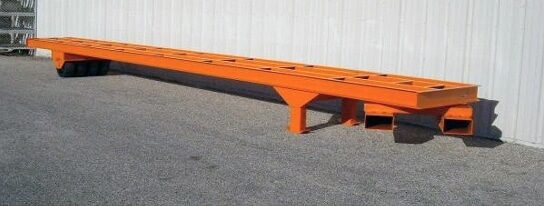
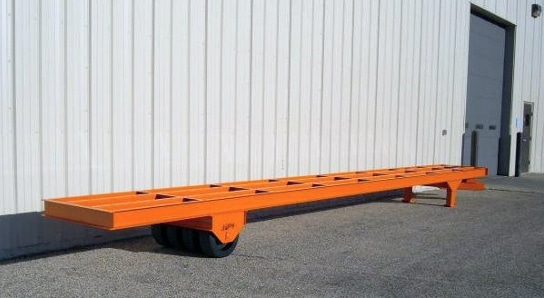
For example, our trail skids have the ability to double, or even triple, your forklift’s load capacity. Trail skids work by redistributing some of the load weight from the forklift’s front wheels to the roller/wheels on the far end of the skid.

In order to make sure our equipment works safely and effectively with your forklift we can customize the skid’s dimensions, capacity, deck material, and superstructures.

As always, we advise you to make sure that your forklift operators are properly trained in the use of the given attachment and have access to all of the information they need.

What Forklift Capacity Do You Need?

Now that you understand the finer points of a forklift’s load center, you can start to think about how much capacity you need and what sorts of attachments you can or should add. This is going to depend on the needs of your business, but important considerations are things like: the average amount of weight you need to move, the average lift height those loads need to reach, and how long or wide those loads are going to be.

If you take the time to fully understand the capacity of a forklift before investing in additional machinery or tools, you’re more likely to avoid forklift accidents, set your forklift operators up for success, and get the most out of your machinery.

Not sure which attachments are right for your needs? Contact us and we can help you figure out what kinds of forklift accessories are right for your warehouse.

How Mother Daughter Carts Help Warehouse Productivity

The Perfect Solution to Increase Your Safety, Efficiency, and Workflow

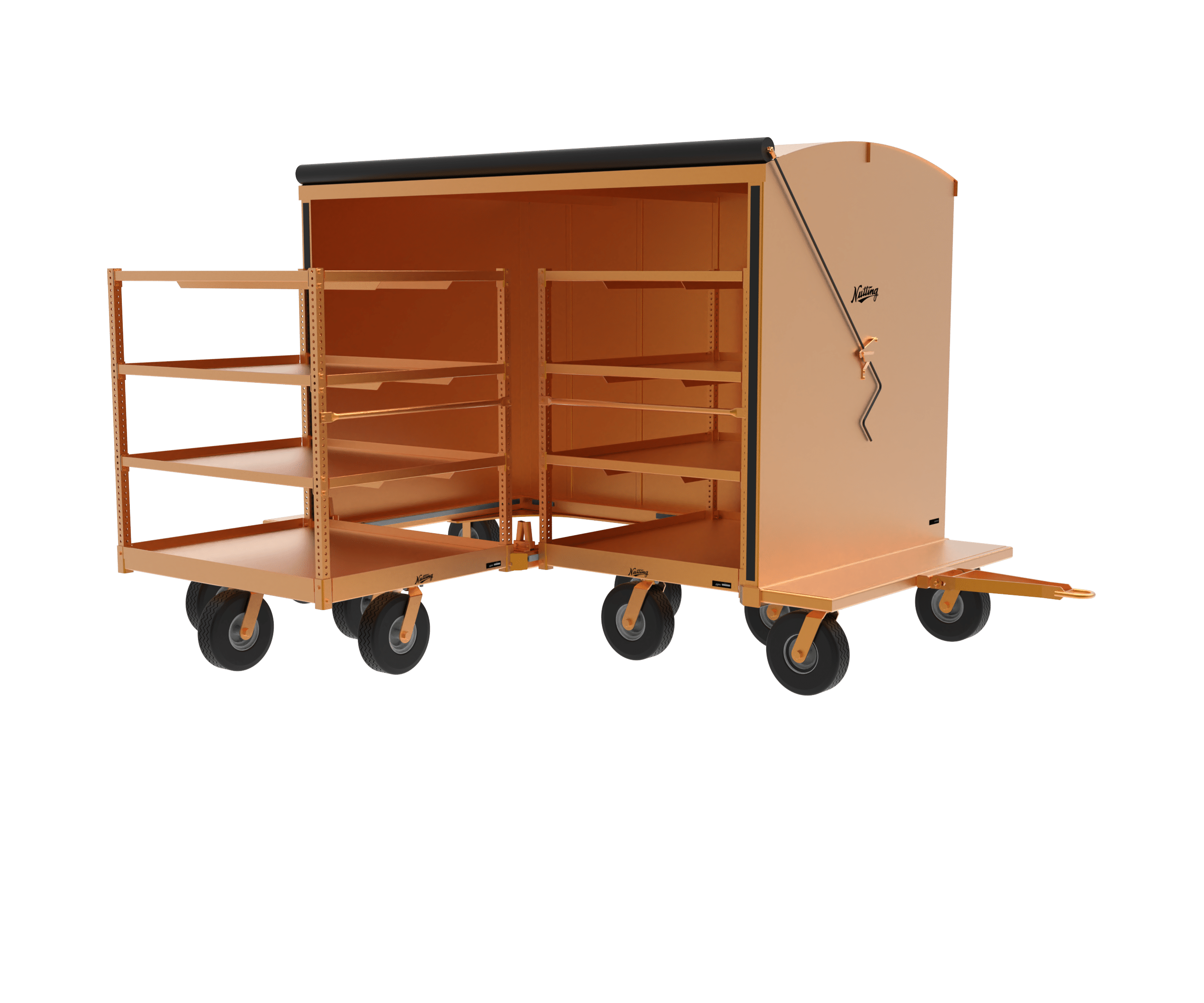
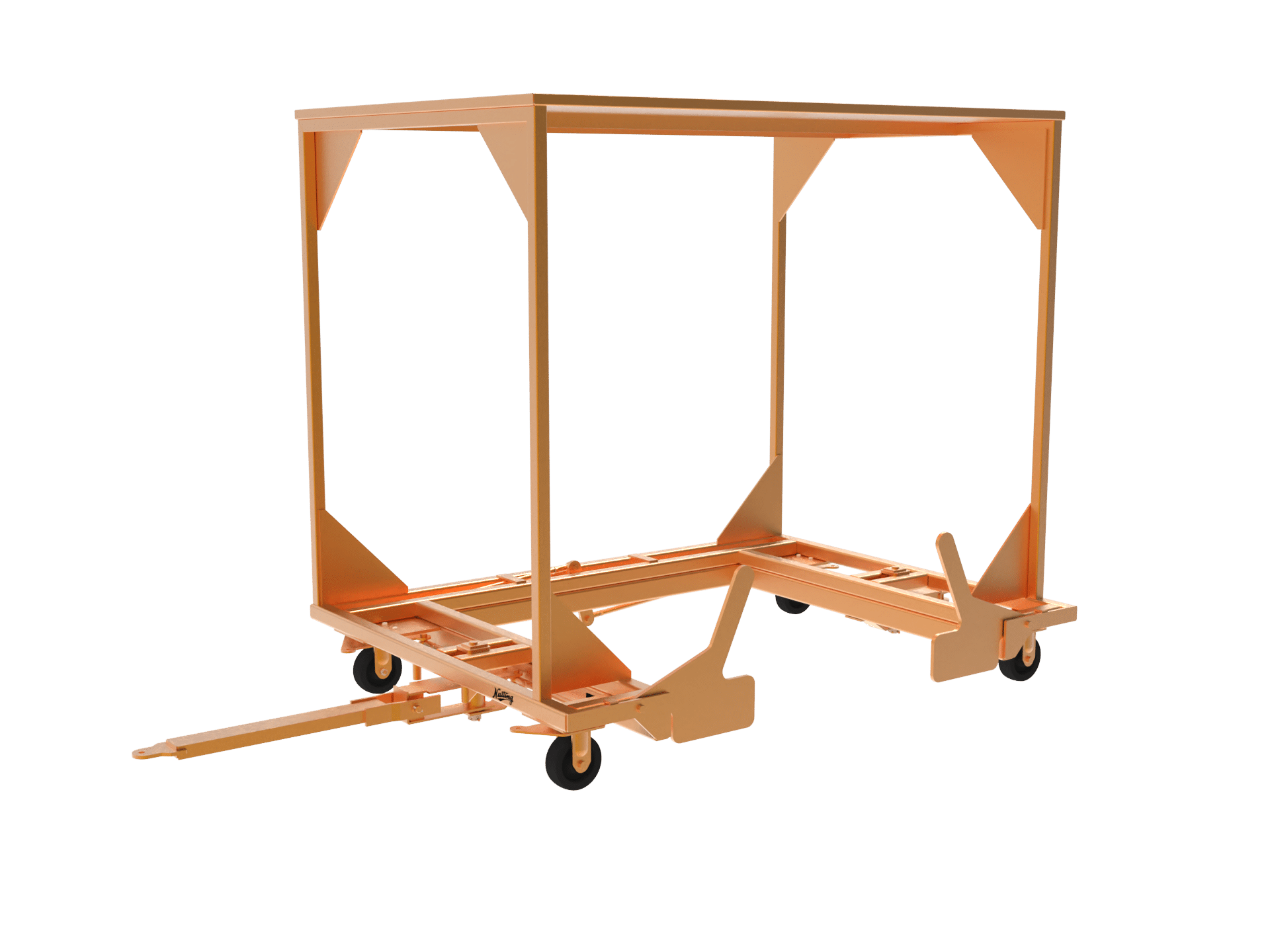
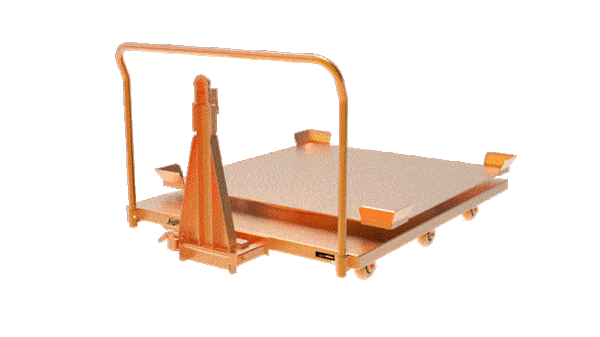
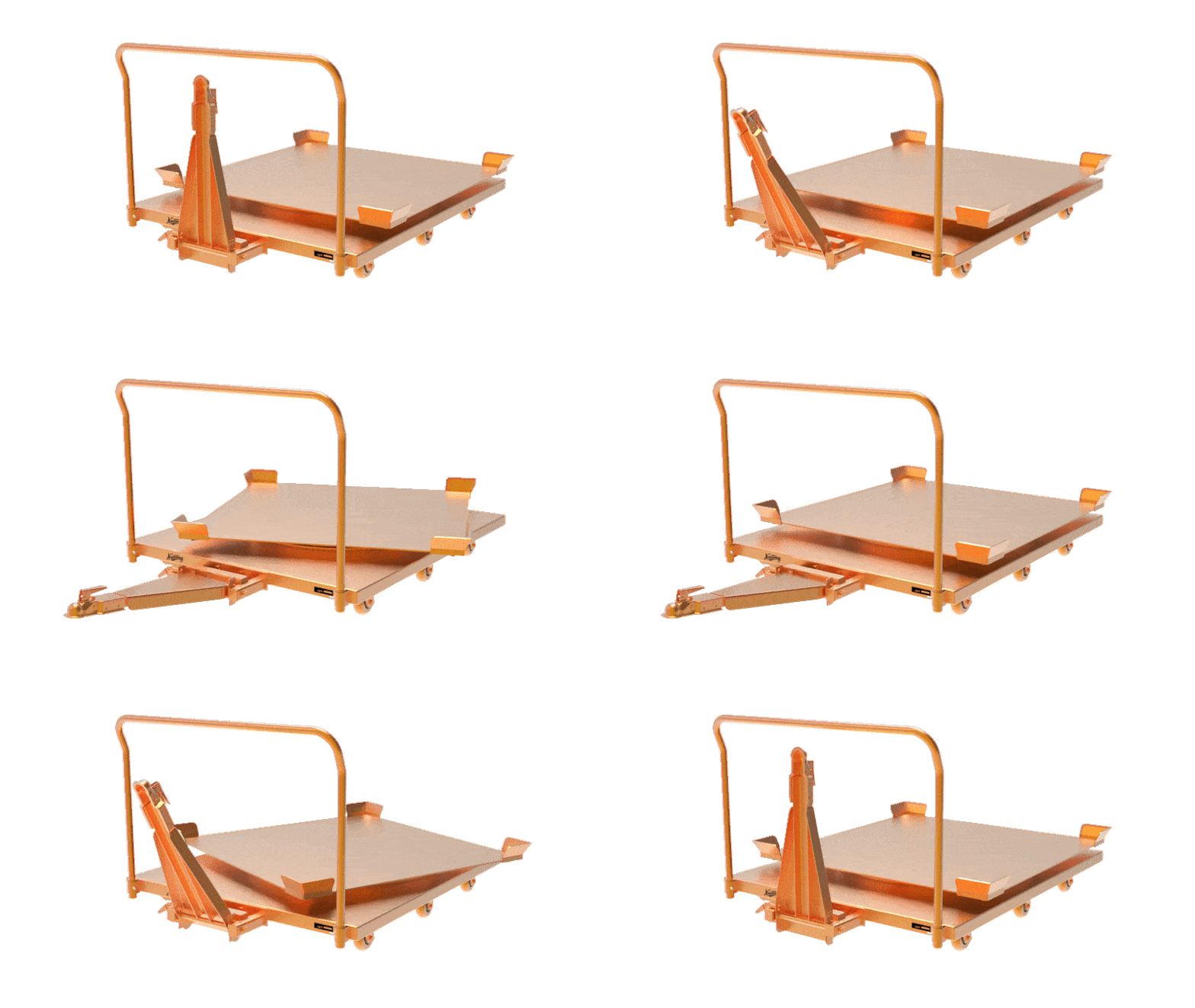
The transportation of goods in a warehouse is a crucial process that can impact the efficiency of the entire operation. If you’re looking for a way to improve warehouse efficiency and workflow, mother-daughter cart systems may be the answer. These systems consist of two parts – a Mother Cart and a Daughter Cart – that work together to create an efficient system for moving materials.

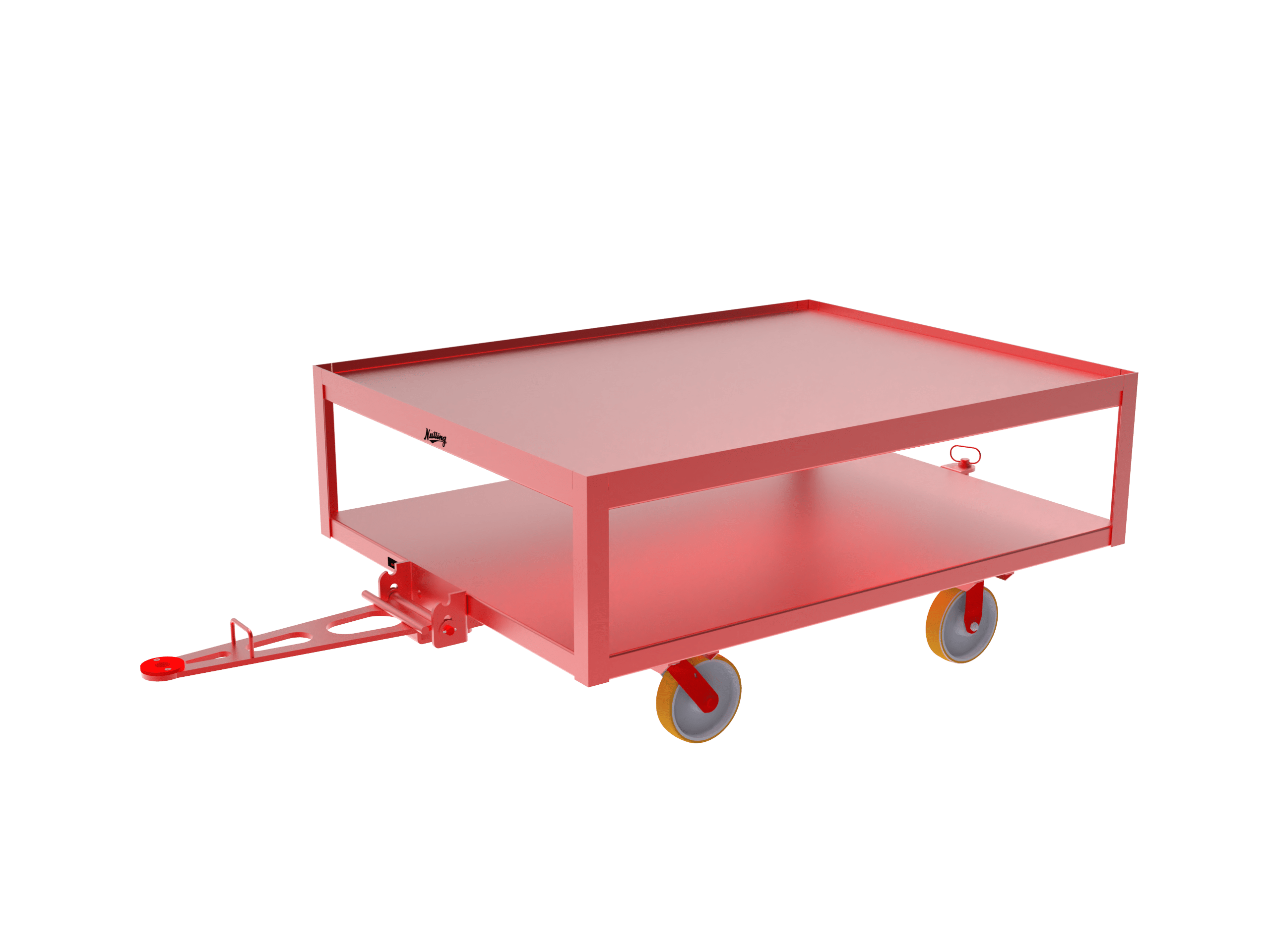
In this system, the Daughter Cart rides within the frame of the Mother Cart, making it easy for them to trail behind a tugger train and then be dropped off at various locations for loading and unloading.  Multiple Mother carts can be easily attached to tuggers or AGVs (automated guided vehicles) and offer a variety of benefits that will help take your business to the next level.

In a traditional warehouse setup, workers would have to constantly move back and forth between different areas to retrieve materials or transport goods. This not only leads to inefficient use of time and resources but also increases the chances of accidents occurring. With mother-daughter cart systems, workers can stay in one area as the carts move around them. This not only saves time but also reduces the risk of accidents.

The mother-daughter cart system is a versatile and efficient way to move inventory in a warehouse setting. Implementing a mother-daughter system allows for a reduction in travel time as the tugger train can continuously move multiple daughter carts throughout the warehouse with minimal downtime. In addition, the mother-daughter cart system improves the flow of goods by allowing employees to quickly and easily load and unload items onto the carts. As a result, this system is an effective way to reduce labor costs and increase efficiency in a warehouse setting.

At Nutting, we understand that mother-daughter cart systems play an important role in facilities across a wide range of industries. That’s why we offer a variety of custom options to ensure that our clients can find the perfect solution for their needs. All of our products are made and manufactured in the USA for over 125 years, so you can rest assured that you’re receiving a high-quality product that will stand up to years of use. Whether you need a cart with a specific number of shelves or one that is designed to hold a certain type of load, we have you covered. Contact us today to learn more about our mother-daughter cart systems and how we can help you streamline your operation.     

EXAMPLES

Are Caster Steer Trailers the Right Choice For You?

Let the experts at Nutting help you decide if caster steer trailers are right for you!

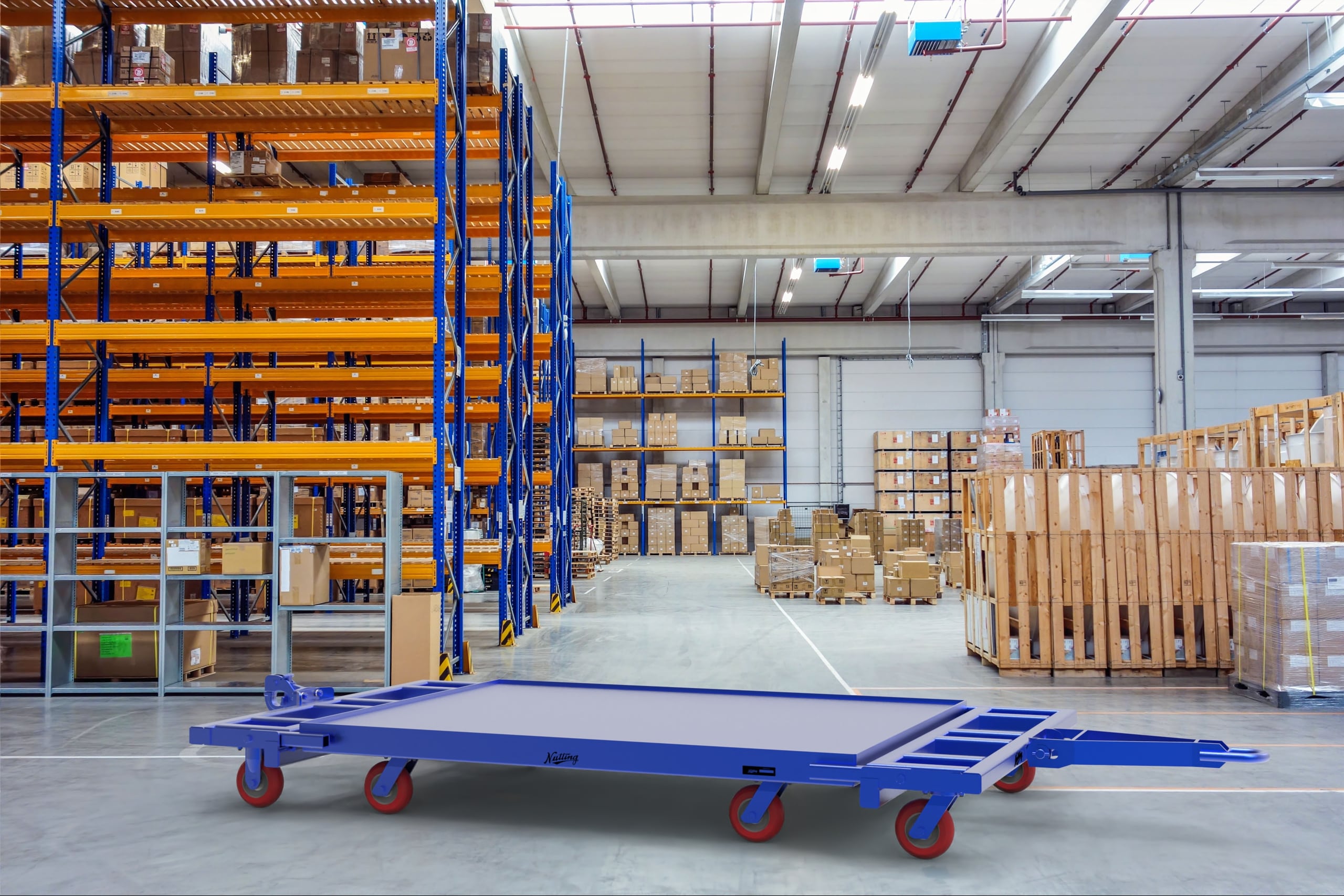
When it comes to choosing the right type of trailer for your warehouse, there are a few factors you need to consider. One important factor is whether you need a trailer that can maneuver in tight spaces. If so, caster steer trailers are a perfect choice.

Caster steer trailers are a type of trailer that is designed to maneuver in tight spaces. Caster steer trailers work by using a pair of swivel casters in the front and a pair of stationary caster wheels at the back of the trailer. The front caster wheels are able to rotate in any direction, which allows the trailer to move in any direction. They are also ideal for indoor use, thanks to their ability to turn on a dime. This makes them a perfect choice for warehouses and other industrial facilities.

Choosing the right trailer for your warehouse can be a daunting task. However, by considering the benefits of using a caster steer trailer in your warehouse, you can make the decision easier. Some of the benefits of using a caster steer trailer include:

  • Increased maneuverability – Caster steer trailers can turn on a dime, making them perfect for maneuvering in tight spaces.
  • Increased efficiency – Caster steer trailers can help you move goods through your warehouse more quickly and efficiently.
  • Reduced wear and tear – Caster steer trailers cause less wear and tear on your warehouse floors than traditional trailers.
U Boat Caster Steer with Shelf
mattress cart

Caster steer trailers can be fitted with a variety of different options, such as lift gates and shelving, to make them even more versatile for your needs. Whatever your needs may be, the Nutting sales and engineering team can help you customize the trailer to fit your specific facility.

Contact us today to learn more!

Contact Us to Learn More

Drag & Drop Files, Choose Files to Upload

Order Picking Platform Cart

April Featured Product of the Month

Order Picking Platform Cart

Z35-007-151

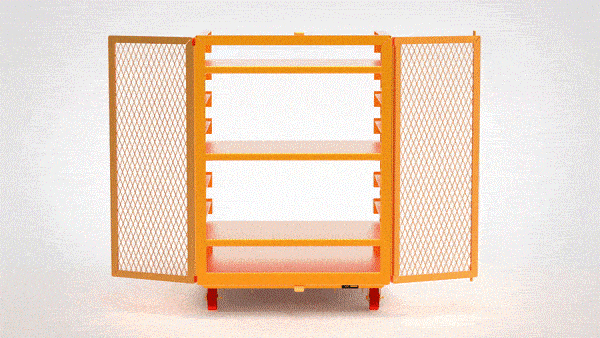
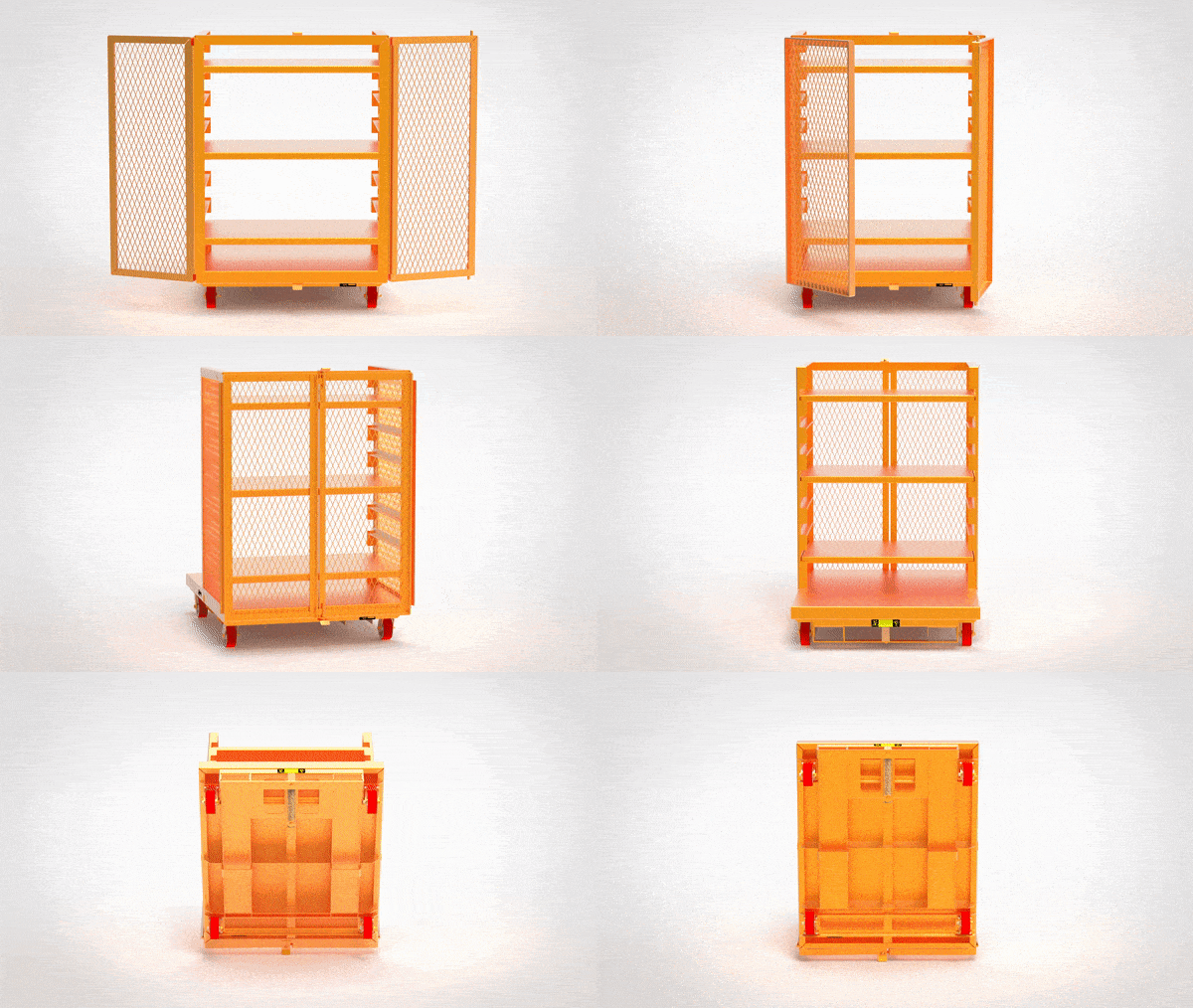
Our Featured Product of the Month for April is the Nutting® Order Picking Platform Cart (Z35-007-151).

  • Fork guides and hardwood clamp block for interface with Electric Order Picker
  • Adjustable shelves
  • Hinged doors for unloading from floor
  • Operator work area
  • Casters for mobile use once cart is off Electric Order Picker
  • Rated for 1,500 lbs load capacity

APPLICATION Picking of small goods less than full carton or pallet

MARKET SEGMENT Warehousing and Distribution, eCommerce

Contact Us To Learn More

Drag & Drop Files, Choose Files to Upload

Swivel Deck Carts

Create ergonomic material handling with Nutting® Swivel Deck Carts
Z52-001-844

swivel deck pallet cart

Our Swivel Deck Carts allow the operator to rotate loads for easy access to all sides without walking around load. This feature can be added on many different cart configurations. Contact us to learn more about the benefits:

  • Rotate 360 degrees – clockwise or counterclockwise
  • Minimize over-reaching on cart by easily rotating the deck
  • Foot pedal mechanism for easy release allowing deck to swivel
  • Improved productivity and efficiency
Allow Nutting to help improve efficiency and ergonomics in your facility. Be part of an innovative material handling solution. Contact us today

Contact Us To Learn More

Drag & Drop Files, Choose Files to Upload